Most ebook files are in PDF format, so you can easily read them using various software such as Foxit Reader or directly on the Google Chrome browser.
Some ebook files are released by publishers in other formats such as .awz, .mobi, .epub, .fb2, etc. You may need to install specific software to read these formats on mobile/PC, such as Calibre.
Please read the tutorial at this link: https://ebookbell.com/faq
We offer FREE conversion to the popular formats you request; however, this may take some time. Therefore, right after payment, please email us, and we will try to provide the service as quickly as possible.
For some exceptional file formats or broken links (if any), please refrain from opening any disputes. Instead, email us first, and we will try to assist within a maximum of 6 hours.
EbookBell Team
4.1
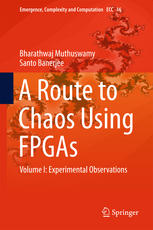
30 reviewsThe purpose of this introductory book is to couple the teaching of chaotic circuit and systems theory with the use of field programmable gate arrays (FPGAs).
As such, it differs from other texts on chaos: first, it puts emphasis on combining theoretical methods, simulation tools and physical realization to help the reader gain an intuitive understanding of the properties of chaotic systems. Second, the "medium" used for physical realization is the FPGA. These devices are massively parallel architectures that can be configured to realize a variety of logic functions. Hence, FPGAs can be configured to emulate systems of differential equations.
Nevertheless maximizing the capabilities of an FPGA requires the user to understand the underlying hardware and also FPGA design software. This is achieved by the third distinctive feature of this book: a lab component in each chapter. Here, readers are asked to experiment with computer simulations and FPGA designs, to further their understanding of concepts covered in the book.
This text is intended for graduate students in science and engineering interested in exploring implementation of nonlinear dynamical (chaotic) systems on FPGAs.