logo

EbookBell.com

Most ebook files are in PDF format, so you can easily read them using various software such as Foxit Reader or directly on the Google Chrome browser.
Some ebook files are released by publishers in other formats such as .awz, .mobi, .epub, .fb2, etc. You may need to install specific software to read these formats on mobile/PC, such as Calibre.

Please read the tutorial at this link:  https://ebookbell.com/faq 


We offer FREE conversion to the popular formats you request; however, this may take some time. Therefore, right after payment, please email us, and we will try to provide the service as quickly as possible.


For some exceptional file formats or broken links (if any), please refrain from opening any disputes. Instead, email us first, and we will try to assist within a maximum of 6 hours.

EbookBell Team
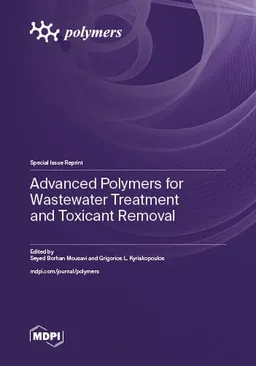
Advanced Polymers For Wastewater Treatment And Toxicant Removal Seyed Borhan Mousavi

  • SKU: BELL-237303902
Advanced Polymers For Wastewater Treatment And Toxicant Removal Seyed Borhan Mousavi
$ 35.00 $ 45.00 (-22%)

0.0

0 reviews

Advanced Polymers For Wastewater Treatment And Toxicant Removal Seyed Borhan Mousavi instant download after payment.

Publisher: MDPI
File Extension: PDF
File size: 40.22 MB
Pages: 180
Author: Seyed Borhan Mousavi, Grigorios L. Kyriakopoulos
ISBN: 9783725844920, 9783725844913, 3725844925, 3725844917
Language: English
Year: 2025

Product desciption

Advanced Polymers For Wastewater Treatment And Toxicant Removal Seyed Borhan Mousavi by Seyed Borhan Mousavi, Grigorios L. Kyriakopoulos 9783725844920, 9783725844913, 3725844925, 3725844917 instant download after payment.

The Special Issue "Advanced Polymers for Wastewater Treatment and Toxicant Removal" focuses on recent innovations in polymer-based materials for the removal of harmful contaminants from wastewater. This Issue focuses on advanced synthesis methods, structural characterization, and the application of polymers and polymer-based composites, including MOFs, for treating a wide range of pollutants such as heavy metals, dyes, pharmaceutical residues, and biological agents. Emphasis is placed on understanding structure–function relationships, adsorption and catalytic mechanisms, and the integration of hybrid or multifunctional systems. Contributions addressing emerging contaminants and environmental sustainability were especially encouraged.

Related Products