Most ebook files are in PDF format, so you can easily read them using various software such as Foxit Reader or directly on the Google Chrome browser.
Some ebook files are released by publishers in other formats such as .awz, .mobi, .epub, .fb2, etc. You may need to install specific software to read these formats on mobile/PC, such as Calibre.
Please read the tutorial at this link: https://ebookbell.com/faq
We offer FREE conversion to the popular formats you request; however, this may take some time. Therefore, right after payment, please email us, and we will try to provide the service as quickly as possible.
For some exceptional file formats or broken links (if any), please refrain from opening any disputes. Instead, email us first, and we will try to assist within a maximum of 6 hours.
EbookBell Team
0.0
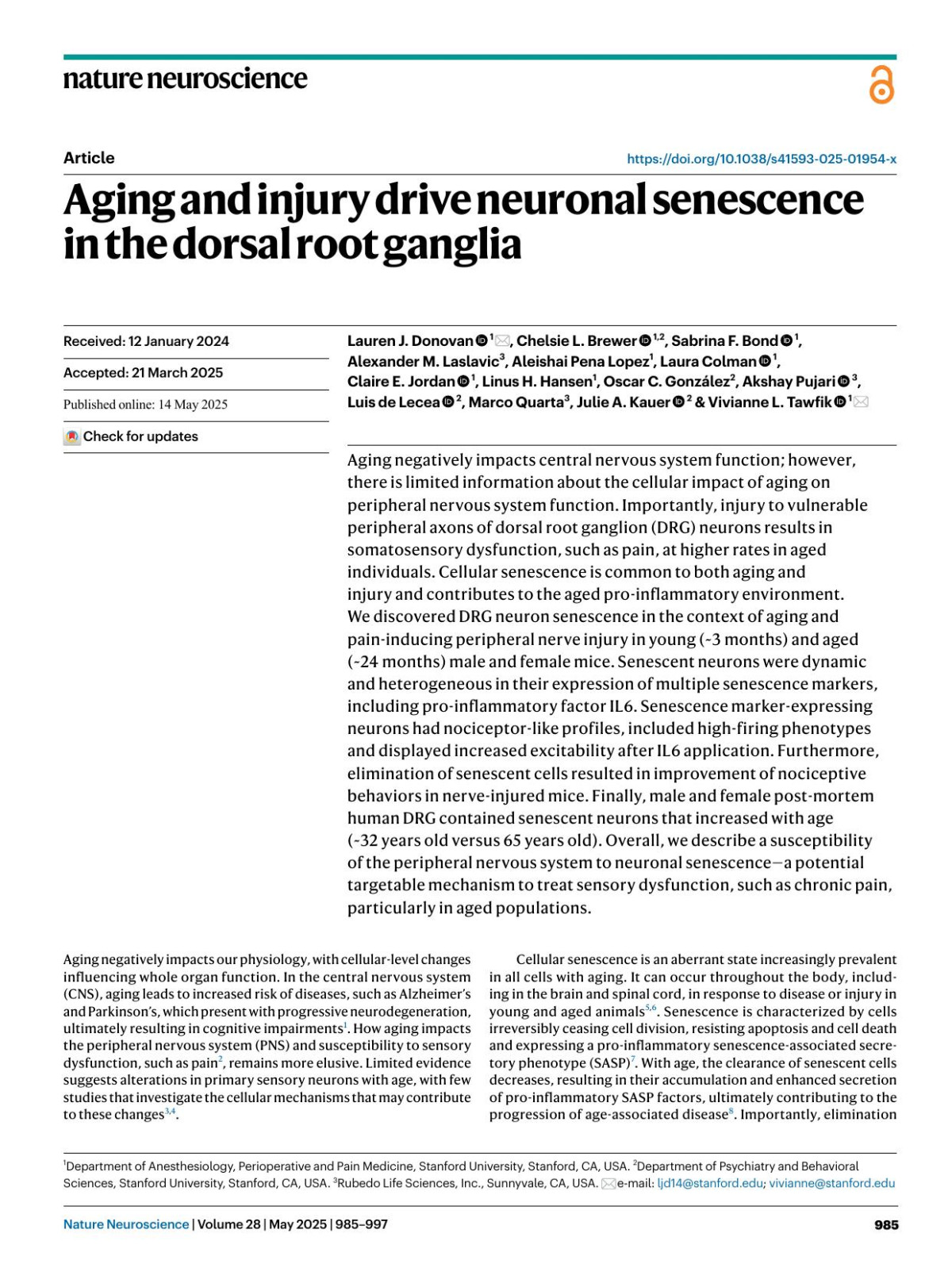
0 reviewsAging negatively impacts central nervous system function; however, there is limited information about the cellular impact of aging on peripheral nervous system function. Importantly, injury to vulnerable peripheral axons of dorsal root ganglion (DRG) neurons results in somatosensory dysfunction, such as pain, at higher rates in aged individuals. Cellular senescence is common to both aging and injury and contributes to the aged pro-inflammatory environment. We discovered DRG neuron senescence in the context of aging and pain-inducing peripheral nerve injury in young (~3 months) and aged (~24 months) male and female mice. Senescent neurons were dynamic and heterogeneous in their expression of multiple senescence markers, including pro-inflammatory factor IL6. Senescence marker-expressing neurons had nociceptor-like profiles, included high-firing phenotypes and displayed increased excitability after IL6 application. Furthermore, elimination of senescent cells resulted in improvement of nociceptive behaviors in nerve-injured mice. Finally, male and female post-mortem human DRG contained senescent neurons that increased with age (~32 years old versus 65 years old). Overall, we describe a susceptibility of the peripheral nervous system to neuronal senescence—a potential targetable mechanism to treat sensory dysfunction, such as chronic pain, particularly in aged populations.