logo

EbookBell.com

Most ebook files are in PDF format, so you can easily read them using various software such as Foxit Reader or directly on the Google Chrome browser.
Some ebook files are released by publishers in other formats such as .awz, .mobi, .epub, .fb2, etc. You may need to install specific software to read these formats on mobile/PC, such as Calibre.

Please read the tutorial at this link:  https://ebookbell.com/faq 


We offer FREE conversion to the popular formats you request; however, this may take some time. Therefore, right after payment, please email us, and we will try to provide the service as quickly as possible.


For some exceptional file formats or broken links (if any), please refrain from opening any disputes. Instead, email us first, and we will try to assist within a maximum of 6 hours.

EbookBell Team
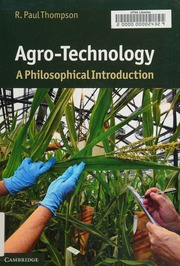
Agrotechnology A Philosophical Introduction 1st Scanned R Paul Thompson

  • SKU: BELL-239820552
Agrotechnology A Philosophical Introduction 1st Scanned R Paul Thompson
$ 35.00 $ 45.00 (-22%)

4.8

84 reviews

Agrotechnology A Philosophical Introduction 1st Scanned R Paul Thompson instant download after payment.

Publisher: Cambridge University Press
File Extension: PDF
File size: 15.47 MB
Pages: 256
Author: R. Paul Thompson
Language: English
Year: 2011
Edition: 1st; Scanned

Product desciption

Agrotechnology A Philosophical Introduction 1st Scanned R Paul Thompson by R. Paul Thompson instant download after payment.

xxiii, 233 p. : 25 cm, \"Humans have been modifying plants and animals for millennia. The dawn of molecular genetics, however, has kindled intense public scrutiny and controversy. Crops, and the food products which include them, have dominated molecular modification in agriculture. Organisations have made unsubstantiated claims and scare mongering is common. In this textbook Paul Thompson presents a clear account of the significant issues--identifying harms and benefits, analysing and managing risk--which lie beneath the cacophony of public controversy. His comprehensive analysis looks especially at genetically modified organisms, and includes an explanation of the scientific background, an analysis of ideological objections, a discussion of legal and ethical concerns, a suggested alternative--organic agriculture--and an examination of the controversy's impact on sub-Saharan African countries. His book will be of interest to students and other readers in philosophy, biology, biotechnology, and public policy\"--, \"Although the current debate about agricultural biotechnology is often narrowly focused on molecular biotechnology (molecular genetic modification), the technological application of biology in agriculture predates the advent of molecular biology. For more than 10,000 years humans have been manipulating the traits of animals and plants (Mazoyer and Roundart, 2006; Thompson, 2009) by manipulating their genes and, thereby their genomes (the specific combination of genes in an organism's cells); the dog was likely the earliest animal to be domesticated (about 16,000 years ago). Early domestication of agricultural animals and plants was based entirely on crude experimentation (trial and error). Biological knowledge was elementary; humans learned early that offspring resemble parents, that selecting animals and plants with desirable traits and breeding them created a population of animals with those traits, and that occasionally a new trait seemed to appear\"--,

Related Products