Most ebook files are in PDF format, so you can easily read them using various software such as Foxit Reader or directly on the Google Chrome browser.
Some ebook files are released by publishers in other formats such as .awz, .mobi, .epub, .fb2, etc. You may need to install specific software to read these formats on mobile/PC, such as Calibre.
Please read the tutorial at this link: https://ebookbell.com/faq
We offer FREE conversion to the popular formats you request; however, this may take some time. Therefore, right after payment, please email us, and we will try to provide the service as quickly as possible.
For some exceptional file formats or broken links (if any), please refrain from opening any disputes. Instead, email us first, and we will try to assist within a maximum of 6 hours.
EbookBell Team
4.0
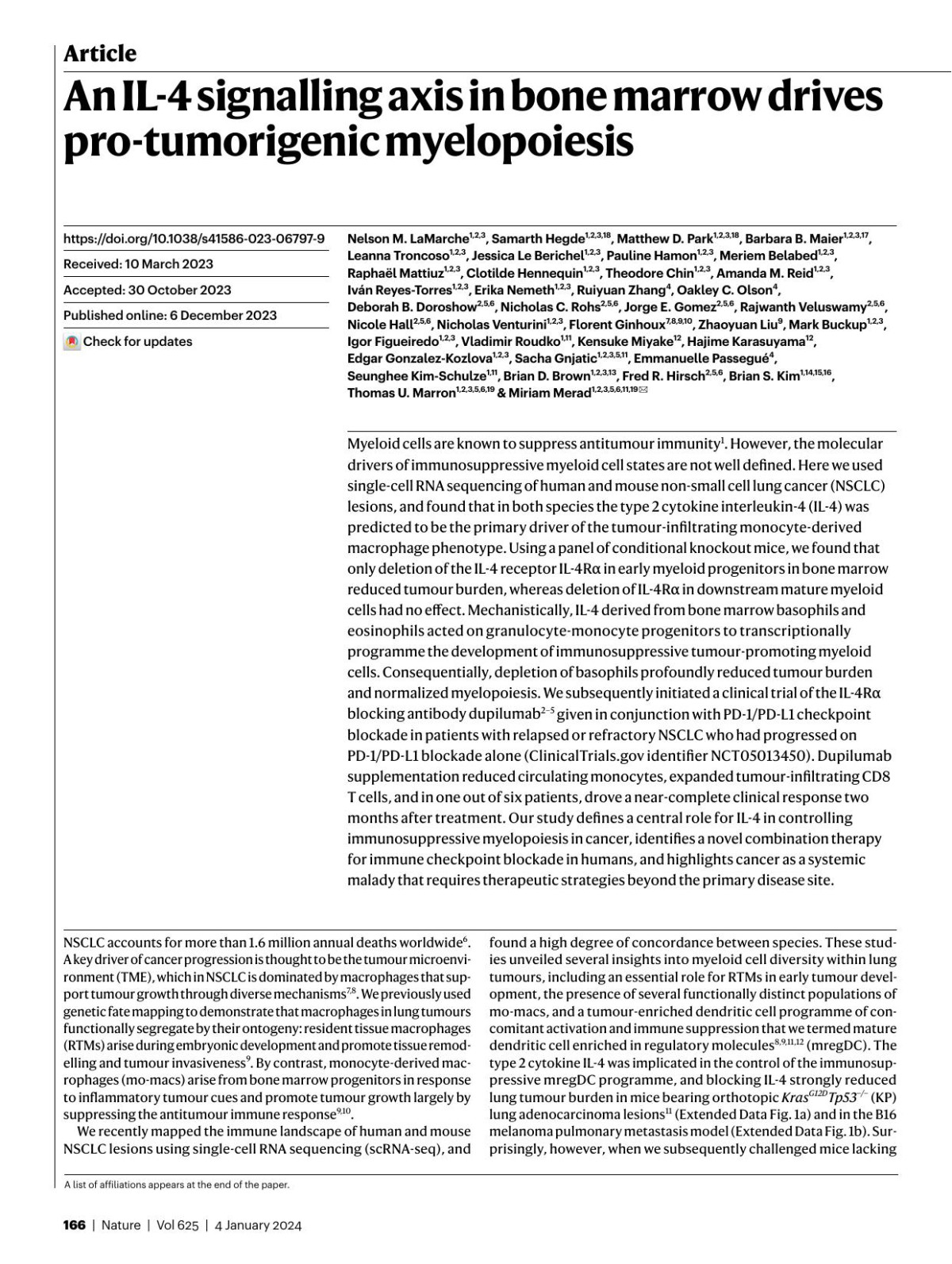
66 reviewsMyeloid cells are known to suppress antitumour immunity1. However, the molecular drivers of immunosuppressive myeloid cell states are not well defned. Here we used single-cell RNA sequencing of human and mouse non-small cell lung cancer (NSCLC) lesions, and found that in both species the type 2 cytokine interleukin-4 (IL-4) was predicted to be the primary driver of the tumour-infltrating monocyte-derived macrophage phenotype. Using a panel of conditional knockout mice, we found that only deletion of the IL-4 receptor IL-4Rα in early myeloid progenitors in bone marrow reduced tumour burden, whereas deletion of IL-4Rα in downstream mature myeloid cells had no efect. Mechanistically, IL-4 derived from bone marrow basophils and eosinophils acted on granulocyte-monocyte progenitors to transcriptionally programme the development of immunosuppressive tumour-promoting myeloid cells. Consequentially, depletion of basophils profoundly reduced tumour burden and normalized myelopoiesis. We subsequently initiated a clinical trial of the IL-4Rα blocking antibody dupilumab2–5 given in conjunction with PD-1/PD-L1 checkpoint blockade in patients with relapsed or refractory NSCLC who had progressed on PD-1/PD-L1 blockade alone (ClinicalTrials.gov identifer NCT05013450). Dupilumab supplementation reduced circulating monocytes, expanded tumour-infltrating CD8 T cells, and in one out of six patients, drove a near-complete clinical response two months after treatment. Our study defnes a central role for IL-4 in controlling immunosuppressive myelopoiesis in cancer, identifes a novel combination therapy for immune checkpoint blockade in humans, and highlights cancer as a systemic malady that requires therapeutic strategies beyond the primary disease site.