logo

EbookBell.com

Most ebook files are in PDF format, so you can easily read them using various software such as Foxit Reader or directly on the Google Chrome browser.
Some ebook files are released by publishers in other formats such as .awz, .mobi, .epub, .fb2, etc. You may need to install specific software to read these formats on mobile/PC, such as Calibre.

Please read the tutorial at this link:  https://ebookbell.com/faq 


We offer FREE conversion to the popular formats you request; however, this may take some time. Therefore, right after payment, please email us, and we will try to provide the service as quickly as possible.


For some exceptional file formats or broken links (if any), please refrain from opening any disputes. Instead, email us first, and we will try to assist within a maximum of 6 hours.

EbookBell Team
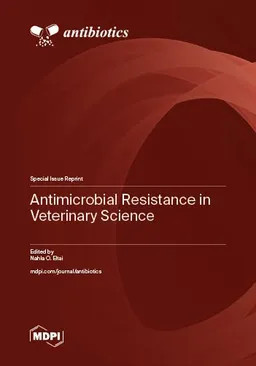
Antimicrobial Resistance In Veterinary Science Nahla O Eltai

  • SKU: BELL-236108706
Antimicrobial Resistance In Veterinary Science Nahla O Eltai
$ 35.00 $ 45.00 (-22%)

4.3

58 reviews

Antimicrobial Resistance In Veterinary Science Nahla O Eltai instant download after payment.

Publisher: MDPI
File Extension: PDF
File size: 9.75 MB
Pages: 194
Author: Nahla O. Eltai
ISBN: 9783725833535, 9783725833542, 3725833532, 3725833540
Language: English
Year: 2025

Product desciption

Antimicrobial Resistance In Veterinary Science Nahla O Eltai by Nahla O. Eltai 9783725833535, 9783725833542, 3725833532, 3725833540 instant download after payment.

Antimicrobial resistance (AMR) is a complicated issue that threatens human and animal health and welfare, the economy, and security worldwide. The imprudent use of antibiotics in human clinical practice, veterinary medicine, and farmed animals is the leading source of the problem. 
-
There is mounting evidence that the non-judicious use of antibiotics for prophylactic and growth promotion purposes in animal agriculture significantly contributes to the development of AMR in animal-associated bacteria. The impact is immense; O'Neal’s report eminently predicted severe mortality, morbidity, and catastrophic economic losses due to AMR across the globe by 2050. 
-
There is a consensus that AMR should be managed from a One Health perspective, incorporating comprehensive information about antibiotic usage in humans, animals, the food chain, and the environment. Animals and wildlife ecosystems are potential reservoirs for multidrug-resistant (MDR) microorganisms and antimicrobial-resistant genes (ARGs) that can be transmitted to humans through the food chain or direct contact. 
-
The presence of plasmid-encoded resistant genes escalates the risk of the rapid dissemination of ARGs. It is essential to include and utilize the information collected from animal pathogens in AMR surveillance programs as a part of the One Health framework, since human and animal health is interconnected. This can reduce the acceleration of AMR and offer more options for antimicrobials for treating human disease.

© 2025 by the authors. Articles in this book are Open Access and distributed under the Creative CommonsAttribution (CC BY) license. The book as a whole is distributed by MDPI under the terms and conditions of the Creative Commons Attribution-NonCommercial-NoDerivs (CC BY-NC-ND) license (

Related Products