logo

EbookBell.com

Most ebook files are in PDF format, so you can easily read them using various software such as Foxit Reader or directly on the Google Chrome browser.
Some ebook files are released by publishers in other formats such as .awz, .mobi, .epub, .fb2, etc. You may need to install specific software to read these formats on mobile/PC, such as Calibre.

Please read the tutorial at this link:  https://ebookbell.com/faq 


We offer FREE conversion to the popular formats you request; however, this may take some time. Therefore, right after payment, please email us, and we will try to provide the service as quickly as possible.


For some exceptional file formats or broken links (if any), please refrain from opening any disputes. Instead, email us first, and we will try to assist within a maximum of 6 hours.

EbookBell Team
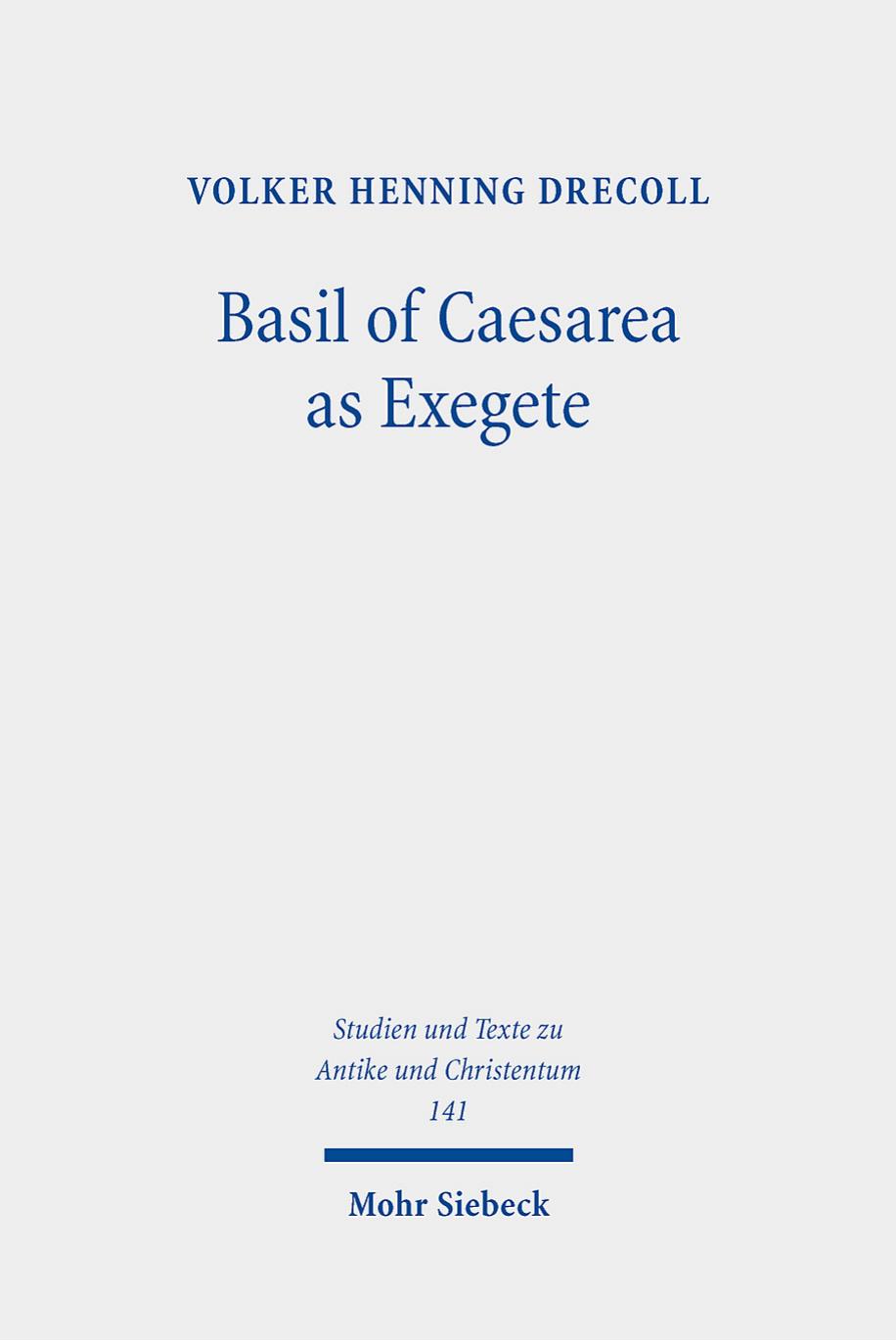
Basil Of Caesarea As Exegete Volker Henning Drecoll

  • SKU: BELL-237083256
Basil Of Caesarea As Exegete Volker Henning Drecoll
$ 35.00 $ 45.00 (-22%)

5.0

38 reviews

Basil Of Caesarea As Exegete Volker Henning Drecoll instant download after payment.

Publisher: Mohr Siebeck
File Extension: PDF
File size: 1.96 MB
Pages: 277
Author: Volker Henning Drecoll
ISBN: 9783161640599, 3161640594
Language: English
Year: 2025
Volume: 141

Product desciption

Basil Of Caesarea As Exegete Volker Henning Drecoll by Volker Henning Drecoll 9783161640599, 3161640594 instant download after payment.

Basil's Homilies on the Hexaemeron are one of the most important exegetical works of the 4th c. CE. This monograph contextualizes it into the ongoing exegetical discourse on Gen. 1 in the mid-fourth c. CE, so far neglected in scholarship. This discourse was mainly shaped by attempts to read Gen. 1 as a scientific text about the origin of the cosmos that was of higher authority than other philosophical views. Basil followed this line of interpretation, though he combined the exegetical methods of homilies with those of a commentary. In this, he proved to be remarkably independent of Origen. There is no evidence for the fact that Basil used Origen's Commentary on Genesis , which raises the more general question about the often assumed »Origenism« of Basil. Also, his Homilies on the Psalms cannot be regarded as an »Origenist« work, because allegorical interpretations play a major role in very few of these homilies only. The refutation of allegorical interpretation as displayed in the work is due not to Origen, but presumably to Didymus' exegesis of Gen. 1. By sticking to the text, Basil wanted to lead his audience to admiration of God as the creator. His audience, however, did not appreciate his efforts, to which Basil reacted by intensifying the homiletic purpose of his sermons in the second half of his homilies. While the Homilies on the Hexaemeron remain unfinished, the transmitted two Homilies on the Creation of Human Beings , attributed in some manuscripts to Basil, pretend to complete the explanation of Gen. 1. The question of whether these homilies are authentic or not is tackled anew by comparing this to other works of Basil, such as On baptism or the Explanation of Isaiah . All these works are considered to be not mere fakes, but they go back to unfinished manuscripts left after his death. After his premature death, the theological discourse changed quickly. Already some years later, Gregory of Nyssa made extensive use of Origen, though he felt deeply…

Related Products