Most ebook files are in PDF format, so you can easily read them using various software such as Foxit Reader or directly on the Google Chrome browser.
Some ebook files are released by publishers in other formats such as .awz, .mobi, .epub, .fb2, etc. You may need to install specific software to read these formats on mobile/PC, such as Calibre.
Please read the tutorial at this link: https://ebookbell.com/faq
We offer FREE conversion to the popular formats you request; however, this may take some time. Therefore, right after payment, please email us, and we will try to provide the service as quickly as possible.
For some exceptional file formats or broken links (if any), please refrain from opening any disputes. Instead, email us first, and we will try to assist within a maximum of 6 hours.
EbookBell Team
0.0
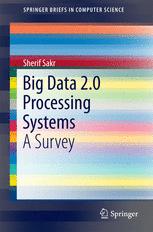
0 reviewsThis book provides readers the “big picture” and a comprehensive survey of the domain of big data processing systems. For the past decade, the Hadoop framework has dominated the world of big data processing, yet recently academia and industry have started to recognize its limitations in several application domains and big data processing scenarios such as the large-scale processing of structured data, graph data and streaming data. Thus, it is now gradually being replaced by a collection of engines that are dedicated to specific verticals (e.g. structured data, graph data, and streaming data). The book explores this new wave of systems, which it refers to as Big Data 2.0 processing systems.
After Chapter 1 presents the general background of the big data phenomena, Chapter 2 provides an overview of various general-purpose big data processing systems that allow their users to develop various big data processing jobs for different application domains. In turn, Chapter 3 examines various systems that have been introduced to support the SQL flavor on top of the Hadoop infrastructure and provide competing and scalable performance in the processing of large-scale structured data. Chapter 4 discusses several systems that have been designed to tackle the problem of large-scale graph processing, while the main focus of Chapter 5 is on several systems that have been designed to provide scalable solutions for processing big data streams, and on other sets of systems that have been introduced to support the development of data pipelines between various types of big data processing jobs and systems. Lastly, Chapter 6 shares conclusions and an outlook on future research challenges.
Overall, the book offers a valuable reference guide for students, researchers and professionals in the domain of big data processing systems. Further, its comprehensive content will hopefully encourage readers to pursue further research on the subject.