Most ebook files are in PDF format, so you can easily read them using various software such as Foxit Reader or directly on the Google Chrome browser.
Some ebook files are released by publishers in other formats such as .awz, .mobi, .epub, .fb2, etc. You may need to install specific software to read these formats on mobile/PC, such as Calibre.
Please read the tutorial at this link: https://ebookbell.com/faq
We offer FREE conversion to the popular formats you request; however, this may take some time. Therefore, right after payment, please email us, and we will try to provide the service as quickly as possible.
For some exceptional file formats or broken links (if any), please refrain from opening any disputes. Instead, email us first, and we will try to assist within a maximum of 6 hours.
EbookBell Team
5.0
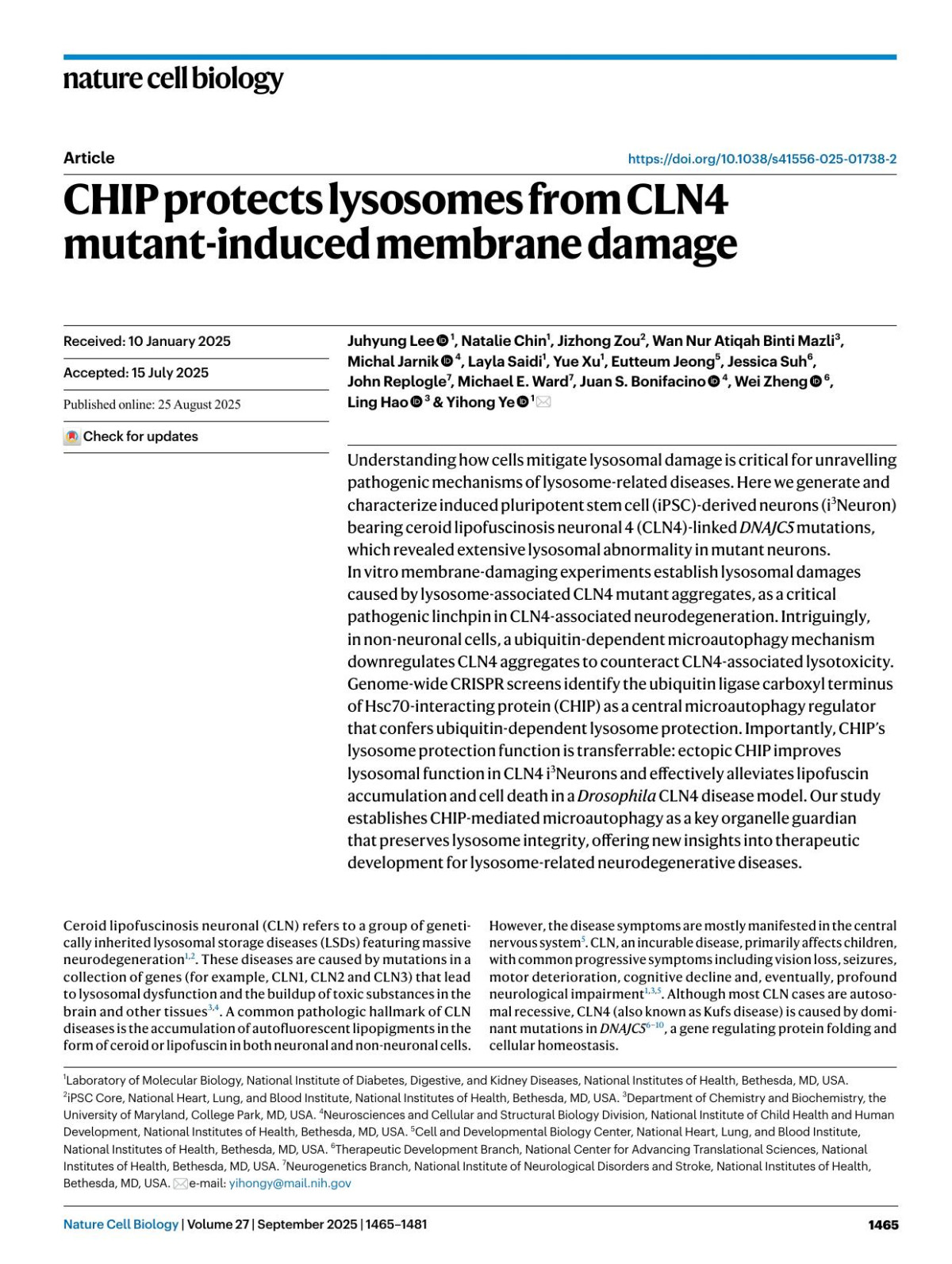
30 reviewsUnderstanding how cells mitigate lysosomal damage is critical for unravelling pathogenic mechanisms of lysosome-related diseases. Here we generate and characterize induced pluripotent stem cell (iPSC)-derived neurons (i3Neuron) bearing ceroid lipofuscinosis neuronal 4 (CLN4)-linked DNAJC5 mutations, which revealed extensive lysosomal abnormality in mutant neurons. In vitro membrane-damaging experiments establish lysosomal damages caused by lysosome-associated CLN4 mutant aggregates, as a critical pathogenic linchpin in CLN4-associated neurodegeneration. Intriguingly, in non-neuronal cells, a ubiquitin-dependent microautophagy mechanism downregulates CLN4 aggregates to counteract CLN4-associated lysotoxicity. Genome-wide CRISPR screens identify the ubiquitin ligase carboxyl terminus of Hsc70-interacting protein (CHIP) as a central microautophagy regulator that confers ubiquitin-dependent lysosome protection. Importantly, CHIP’s lysosome protection function is transferrable: ectopic CHIP improves lysosomal function in CLN4 i3Neurons and efectively alleviates lipofuscin accumulation and cell death in a Drosophila CLN4 disease model. Our study establishes CHIP-mediated microautophagy as a key organelle guardian that preserves lysosome integrity, ofering new insights into therapeutic development for lysosome-related neurodegenerative diseases.