Most ebook files are in PDF format, so you can easily read them using various software such as Foxit Reader or directly on the Google Chrome browser.
Some ebook files are released by publishers in other formats such as .awz, .mobi, .epub, .fb2, etc. You may need to install specific software to read these formats on mobile/PC, such as Calibre.
Please read the tutorial at this link: https://ebookbell.com/faq
We offer FREE conversion to the popular formats you request; however, this may take some time. Therefore, right after payment, please email us, and we will try to provide the service as quickly as possible.
For some exceptional file formats or broken links (if any), please refrain from opening any disputes. Instead, email us first, and we will try to assist within a maximum of 6 hours.
EbookBell Team
5.0
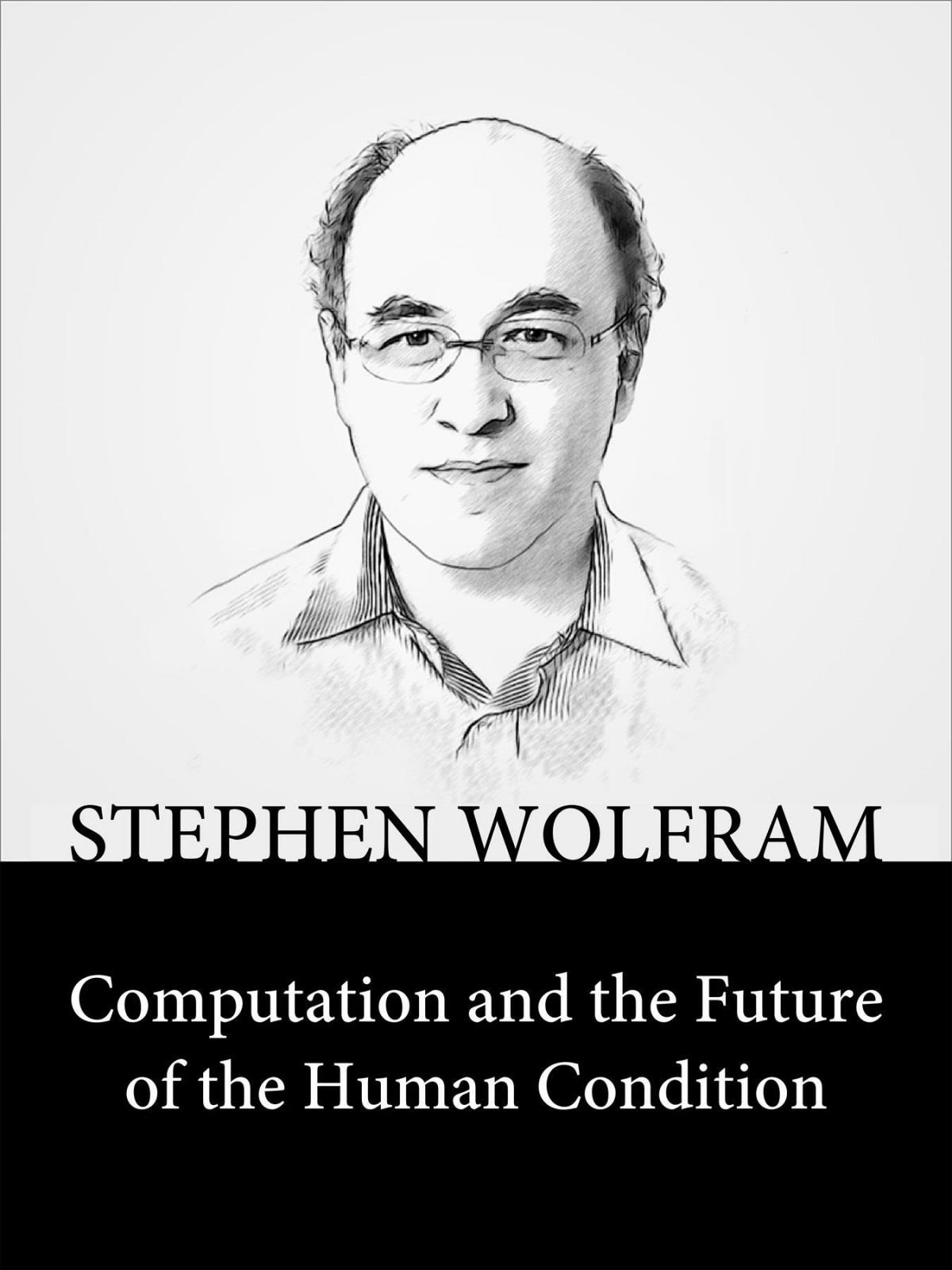
20 reviewsStephen Wolfram is the creator of Mathematica and Wolfram|Alpha and the author of A New Kind of Science and An Elementary Introduction to the Wolfram Language. In this short ebook, Dr. Wolfram dives into his theories of computation and the universe.
Take a look at this short excerpt from the ebook Computation and the Future of the Human Condition :
“In traditional engineering, one starts with some purpose in mind, then explicitly tries to construct a system that achieves that purpose.
And typically at each step one insists on foreseeing what the system will do.
With the result that the system must always be quite computationally reducible.
But in the computational universe there are lots of systems that aren’t computationally reducible.
So can we use these systems for technology?
The answer is absolutely yes.
Sometimes we look at the systems and realize that there’s some purpose for which they can be used.
But more often, we first identify a purpose, and then start searching the computational universe for systems that can achieve that purpose.
Things like this have been done a little in traditional engineering—even, say, with
Edison searching for his light-bulb filaments.
But it’s vastly more efficient and streamlined in the computational universe.