logo

EbookBell.com

Most ebook files are in PDF format, so you can easily read them using various software such as Foxit Reader or directly on the Google Chrome browser.
Some ebook files are released by publishers in other formats such as .awz, .mobi, .epub, .fb2, etc. You may need to install specific software to read these formats on mobile/PC, such as Calibre.

Please read the tutorial at this link:  https://ebookbell.com/faq 


We offer FREE conversion to the popular formats you request; however, this may take some time. Therefore, right after payment, please email us, and we will try to provide the service as quickly as possible.


For some exceptional file formats or broken links (if any), please refrain from opening any disputes. Instead, email us first, and we will try to assist within a maximum of 6 hours.

EbookBell Team
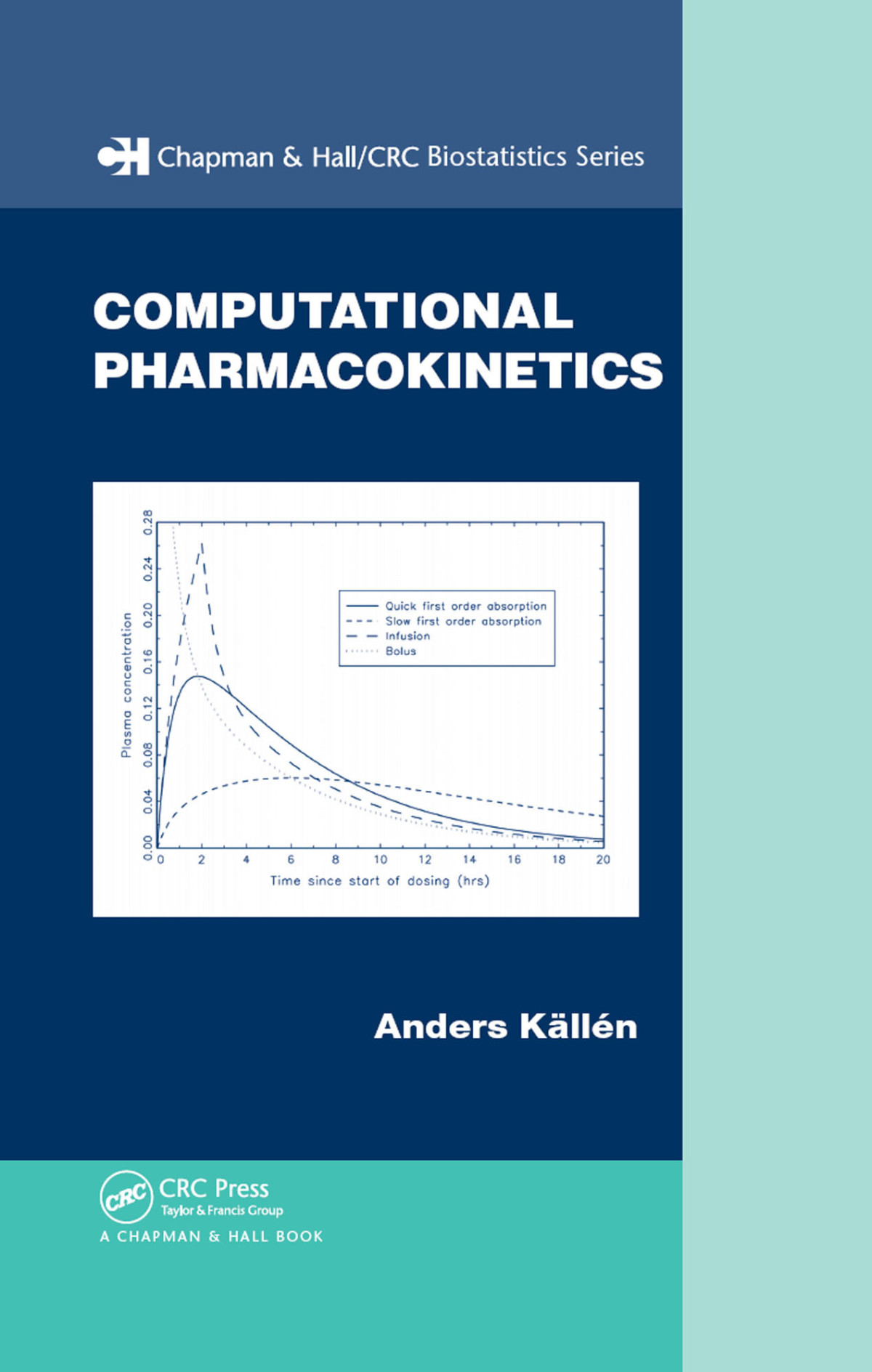
Computational Pharmacokinetics Anders Källén

  • SKU: BELL-237347054
Computational Pharmacokinetics Anders Källén
$ 35.00 $ 45.00 (-22%)

4.7

36 reviews

Computational Pharmacokinetics Anders Källén instant download after payment.

Publisher: Taylor & Francis Group
File Extension: EPUB
File size: 1.83 MB
Author: Anders Källén
Language: English
Year: 2008

Product desciption

Computational Pharmacokinetics Anders Källén by Anders Källén instant download after payment.

Being that pharmacokinetics (PK) is the study of how the body handles various substances, it is not surprising that PK plays an important role in the early development of new drugs. However, the clinical research community widely believes that mathematics in some way blurs the true meaning of PK. Demonstrating that quite the opposite is true, Computational Pharmacokinetics outlines the fundamental concepts and models of PK from a mathematical perspective based on clinically relevant parameters. After an introductory chapter, the book presents a noncompartmental approach to PK and discusses the numerical analysis of PK data, including a description of an absorption process through numerical deconvolution. The author then builds a simple physiological model to better understand PK volumes and compares this model to other methods. The book also introduces compartmental models, discusses their limitations, and creates a general-purpose type of model. The final chapter looks at the relationship between drug concentration and effect, known as PK/pharmacodynamics (PD) modeling. With both a solid discussion of theory and the use of practical examples, this book will enable readers to thoroughly grasp the computational factors of PK modeling.

Related Products