logo

EbookBell.com

Most ebook files are in PDF format, so you can easily read them using various software such as Foxit Reader or directly on the Google Chrome browser.
Some ebook files are released by publishers in other formats such as .awz, .mobi, .epub, .fb2, etc. You may need to install specific software to read these formats on mobile/PC, such as Calibre.

Please read the tutorial at this link:  https://ebookbell.com/faq 


We offer FREE conversion to the popular formats you request; however, this may take some time. Therefore, right after payment, please email us, and we will try to provide the service as quickly as possible.


For some exceptional file formats or broken links (if any), please refrain from opening any disputes. Instead, email us first, and we will try to assist within a maximum of 6 hours.

EbookBell Team
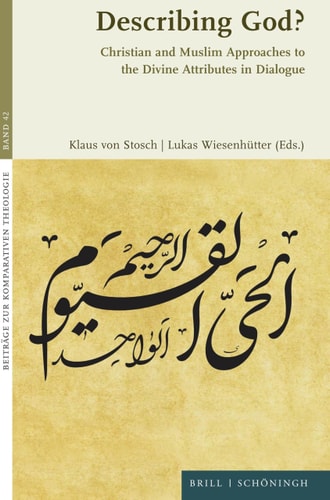
Describing God Christian And Muslim Approaches To The Divine Attributes In Dialogue Klaus Von Stosch

  • SKU: BELL-238472324
Describing God Christian And Muslim Approaches To The Divine Attributes In Dialogue Klaus Von Stosch
$ 35.00 $ 45.00 (-22%)

4.0

66 reviews

Describing God Christian And Muslim Approaches To The Divine Attributes In Dialogue Klaus Von Stosch instant download after payment.

Publisher: Brill
File Extension: PDF
File size: 2.04 MB
Pages: 270
Author: Klaus von Stosch, Lukas Wiesenhütter
ISBN: 9783506796950, 9783657796953, 350679695X, 3657796959
Language: English
Year: 2025
Volume: 42

Product desciption

Describing God Christian And Muslim Approaches To The Divine Attributes In Dialogue Klaus Von Stosch by Klaus Von Stosch, Lukas Wiesenhütter 9783506796950, 9783657796953, 350679695X, 3657796959 instant download after payment.

This volume engages traditional and contemporary approaches to the Divine attributes in Christian-Muslim dialogue. A particular focus lies on the attributes of omnipotence and omniscience, justice and mercy, as well as simplicity and divine action. Engaging these attributes comparatively, two questions are posed: How can these attributes be conceived today, and to what extent is a mutual learning across religious traditions possible? Thereby, a special focus is placed on the role of analytic philosophy. How do the philosopical ‘language games‘ used contribute to communicability across religions?

Related Products