logo

EbookBell.com

Most ebook files are in PDF format, so you can easily read them using various software such as Foxit Reader or directly on the Google Chrome browser.
Some ebook files are released by publishers in other formats such as .awz, .mobi, .epub, .fb2, etc. You may need to install specific software to read these formats on mobile/PC, such as Calibre.

Please read the tutorial at this link:  https://ebookbell.com/faq 


We offer FREE conversion to the popular formats you request; however, this may take some time. Therefore, right after payment, please email us, and we will try to provide the service as quickly as possible.


For some exceptional file formats or broken links (if any), please refrain from opening any disputes. Instead, email us first, and we will try to assist within a maximum of 6 hours.

EbookBell Team
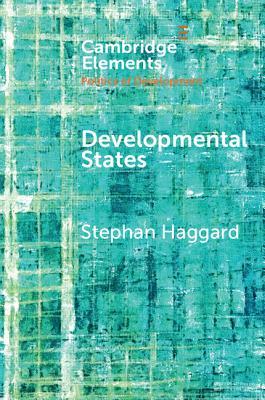
Developmental States Paperback Stephan Haggard

  • SKU: BELL-7425270
Developmental States Paperback Stephan Haggard
$ 35.00 $ 45.00 (-22%)

4.4

42 reviews

Developmental States Paperback Stephan Haggard instant download after payment.

Publisher: Cambridge University Press
File Extension: PDF
File size: 2.96 MB
Pages: 75
Author: Stephan Haggard
ISBN: 9781108449496, 1108449492
Language: English
Year: 2018
Edition: Paperback

Product desciption

Developmental States Paperback Stephan Haggard by Stephan Haggard 9781108449496, 1108449492 instant download after payment.

The concept of the developmental state emerged to explain the rapid growth of a number of countries in East Asia in the postwar period. Yet the developmental state literature also offered a theoretical approach to growth that was heterodox with respect to prevailing approaches in both economics and political science. Arguing for the distinctive features of developmental states, its proponents emphasized the role of government intervention and industrial policy as well as the significance of strong states and particular social coalitions. This literature blossomed into a wider approach, firmly planted in a much longer heterodox tradition, that explored comparisons with states that were decidedly not developmentalist, thus contributing to our historical understanding of long-run growth. This Element provides a critical but sympathetic overview of this literature and ends with its revival and a look forward at the possibility for developmentalist approaches, both in the advanced and developing world.

Related Products