logo

EbookBell.com

Most ebook files are in PDF format, so you can easily read them using various software such as Foxit Reader or directly on the Google Chrome browser.
Some ebook files are released by publishers in other formats such as .awz, .mobi, .epub, .fb2, etc. You may need to install specific software to read these formats on mobile/PC, such as Calibre.

Please read the tutorial at this link:  https://ebookbell.com/faq 


We offer FREE conversion to the popular formats you request; however, this may take some time. Therefore, right after payment, please email us, and we will try to provide the service as quickly as possible.


For some exceptional file formats or broken links (if any), please refrain from opening any disputes. Instead, email us first, and we will try to assist within a maximum of 6 hours.

EbookBell Team
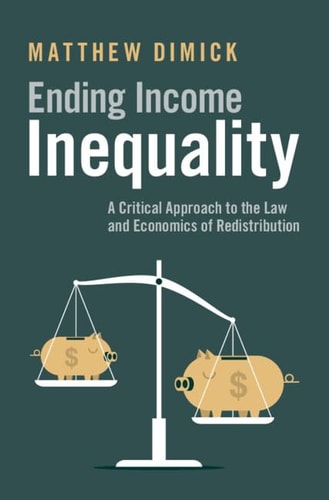
Ending Income Inequality A Critical Approach To The Law And Economics Of Redistribution Matthew Dimick

  • SKU: BELL-238505966
Ending Income Inequality A Critical Approach To The Law And Economics Of Redistribution Matthew Dimick
$ 35.00 $ 45.00 (-22%)

4.3

88 reviews

Ending Income Inequality A Critical Approach To The Law And Economics Of Redistribution Matthew Dimick instant download after payment.

Publisher: Cambridge University Press
File Extension: PDF
File size: 2.19 MB
Pages: 363
Author: Matthew Dimick
ISBN: 9781108842846, 9781108822848, 9781108906418, 1108842844, 1108822843, 1108906419, 101017/9781108906418
Language: English
Year: 2025

Product desciption

Ending Income Inequality A Critical Approach To The Law And Economics Of Redistribution Matthew Dimick by Matthew Dimick 9781108842846, 9781108822848, 9781108906418, 1108842844, 1108822843, 1108906419, 101017/9781108906418 instant download after payment.

Income inequality in America has been on the rise for decades, but policy and legal thought has yet to catch up. Both parties in the United States have been hesitant to intervene in the market to address this problem, while the income tax system has been touted as a better and more efficient way to tackle income inequality. However, the tax system itself has failed to keep pace with the widening gaps in income. Ending Income Inequality challenges arguments made by legal scholars in the field of law and economics, who have supported the tax system over redistributive legal rules. By examining specific areas of the law such as minimum wage, collective bargaining, antitrust law, intellectual property, and housing regulation, the book argues that using legal rules, in addition to income taxes, is a promising path to reverse rising inequality.

Related Products