logo

EbookBell.com

Most ebook files are in PDF format, so you can easily read them using various software such as Foxit Reader or directly on the Google Chrome browser.
Some ebook files are released by publishers in other formats such as .awz, .mobi, .epub, .fb2, etc. You may need to install specific software to read these formats on mobile/PC, such as Calibre.

Please read the tutorial at this link:  https://ebookbell.com/faq 


We offer FREE conversion to the popular formats you request; however, this may take some time. Therefore, right after payment, please email us, and we will try to provide the service as quickly as possible.


For some exceptional file formats or broken links (if any), please refrain from opening any disputes. Instead, email us first, and we will try to assist within a maximum of 6 hours.

EbookBell Team
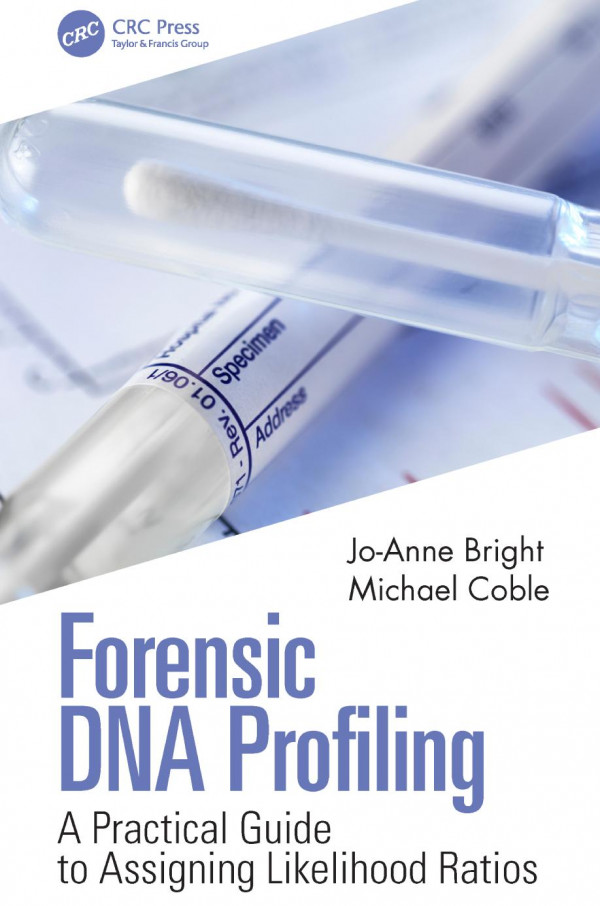
Forensic Dna Profilinga Practical Guide To Assigning Likelihood Ratios 1st Edition Joanne Bright

  • SKU: BELL-11910228
Forensic Dna Profilinga Practical Guide To Assigning Likelihood Ratios 1st Edition Joanne Bright
$ 35.00 $ 45.00 (-22%)

4.1

20 reviews

Forensic Dna Profilinga Practical Guide To Assigning Likelihood Ratios 1st Edition Joanne Bright instant download after payment.

Publisher: CRC Press
File Extension: PDF
File size: 6.26 MB
Pages: 132
Author: Jo-Anne Bright, Michael Coble
ISBN: 9780367029029, 9780429001017, 9780429671425, 9780429672910, 0367029022, 0429001010, 0429671423, 0429672918
Language: English
Year: 2019
Edition: 1

Product desciption

Forensic Dna Profilinga Practical Guide To Assigning Likelihood Ratios 1st Edition Joanne Bright by Jo-anne Bright, Michael Coble 9780367029029, 9780429001017, 9780429671425, 9780429672910, 0367029022, 0429001010, 0429671423, 0429672918 instant download after payment.

DNA testing and its forensic analysis are recognized as the “gold standard” in forensic identification science methods. However, there is a great need for a hands-on step-by-step guide to teach the forensic DNA community how to interpret DNA mixtures, how to assign a likelihood ratio, and how to use the subsequent likelihood ratio when reporting interpretation conclusions. Forensic DNA Profiling: A Practical Guide to Assigning Likelihood Ratios will provide a roadmap for labs all over the world and the next generation of analysts who need this foundational understanding. The techniques used in forensic DNA analysis are based upon the accepted principles of molecular biology. The interpretation of a good-quality DNA profile generated from a crime scene stain from a single-source donor provides an unambiguous result when using the most modern forensic DNA methods. Unfortunately, many crime scene profiles are not single source. They are described as mixed since they contain DNA from two or more individuals. Interpretation of DNA mixtures represents one of the greatest challenges to the forensic DNA analyst. As such, the book introduces terms used to describe DNA profiles and profile interpretation. Chapters explain DNA extraction methods, the polymerase chain reaction (PCR), capillary electrophoresis (CE), likelihood ratios (LRs) and their interpretation, and population genetic models—including Mendelian inheritance and Hardy-Weinberg equilibrium. It is important that analysts understand how LRs are generated in a probabilistic framework, ideally with an appreciation of both semicontinuous and fully continuous probabilistic approaches. KEY FEATURES: • The first book to focus entirely on DNA mixtures and the complexities involved with interpreting the results • Takes a hands-on approach offering theory with worked examples and exercises to be easily understood and implementable by laboratory personnel • New methods, heretofore unpublished previously, provide a means to

Related Products