logo

EbookBell.com

Most ebook files are in PDF format, so you can easily read them using various software such as Foxit Reader or directly on the Google Chrome browser.
Some ebook files are released by publishers in other formats such as .awz, .mobi, .epub, .fb2, etc. You may need to install specific software to read these formats on mobile/PC, such as Calibre.

Please read the tutorial at this link:  https://ebookbell.com/faq 


We offer FREE conversion to the popular formats you request; however, this may take some time. Therefore, right after payment, please email us, and we will try to provide the service as quickly as possible.


For some exceptional file formats or broken links (if any), please refrain from opening any disputes. Instead, email us first, and we will try to assist within a maximum of 6 hours.

EbookBell Team
Glycosylation In Neuroinflammation Mechanisms Implications And Therapeutic Strategies For Neurodegenerative Diseases Shenglan Cheng Bo Xiao Zhaohui Luo

  • SKU: BELL-239247240
Glycosylation In Neuroinflammation Mechanisms Implications And Therapeutic Strategies For Neurodegenerative Diseases Shenglan Cheng Bo Xiao Zhaohui Luo
$ 35.00 $ 45.00 (-22%)

0.0

0 reviews

Glycosylation In Neuroinflammation Mechanisms Implications And Therapeutic Strategies For Neurodegenerative Diseases Shenglan Cheng Bo Xiao Zhaohui Luo instant download after payment.

Publisher: x
File Extension: PDF
File size: 4.32 MB
Pages: 29
Author: Shenglan Cheng & Bo Xiao & Zhaohui Luo
Language: English
Year: 2025

Product desciption

Glycosylation In Neuroinflammation Mechanisms Implications And Therapeutic Strategies For Neurodegenerative Diseases Shenglan Cheng Bo Xiao Zhaohui Luo by Shenglan Cheng & Bo Xiao & Zhaohui Luo instant download after payment.

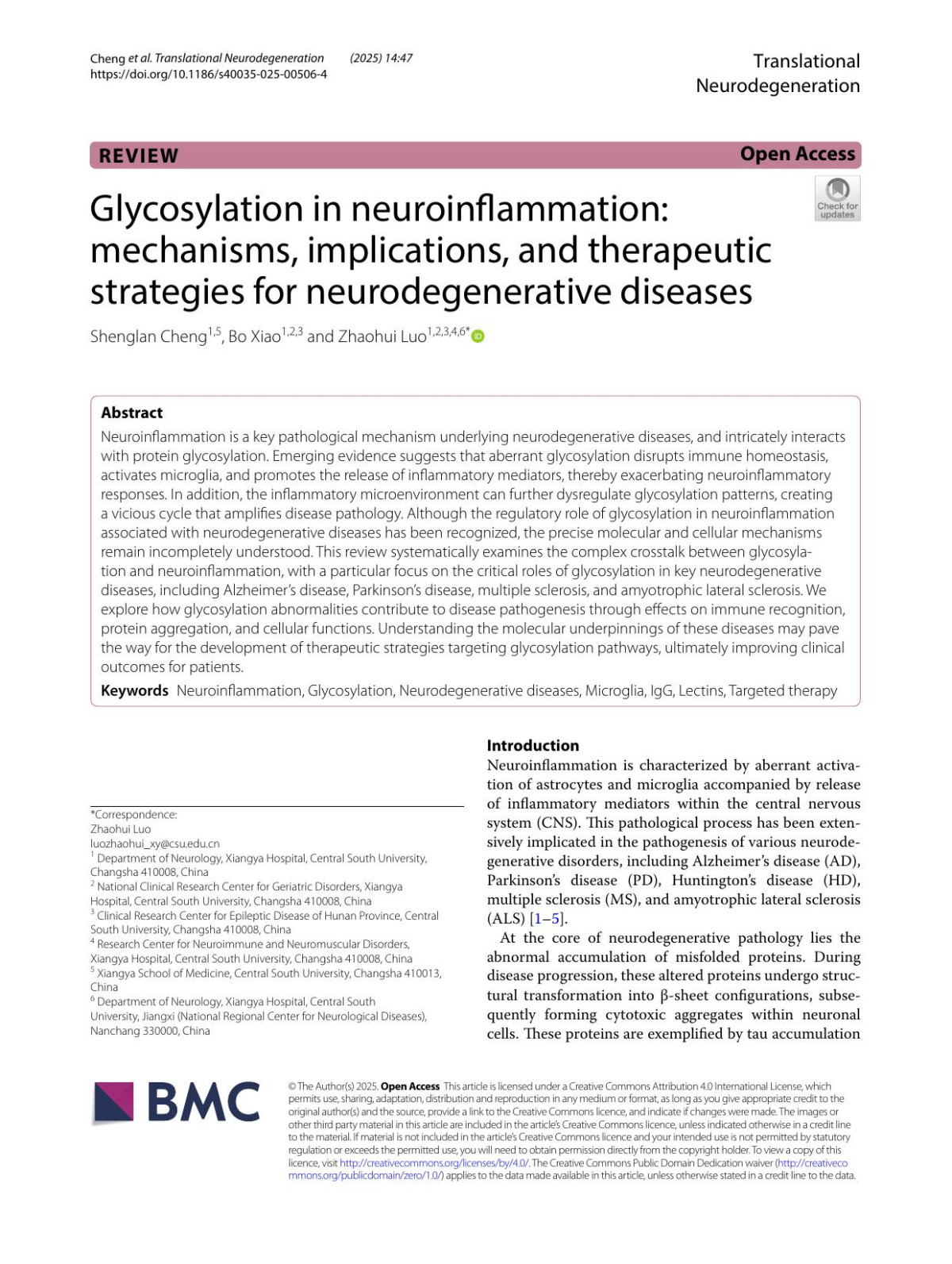
Translational Neurodegeneration,AbstractNeuroinfammation is a key pathological mechanism underlying neurodegenerative diseases, and intricately interacts with protein glycosylation. Emerging evidence suggests that aberrant glycosylation disrupts immune homeostasis, activates microglia, and promotes the release of infammatory mediators, thereby exacerbating neuroinfammatory responses. In addition, the infammatory microenvironment can further dysregulate glycosylation patterns, creating a vicious cycle that amplifes disease pathology. Although the regulatory role of glycosylation in neuroinfammation associated with neurodegenerative diseases has been recognized, the precise molecular and cellular mechanisms remain incompletely understood. This review systematically examines the complex crosstalk between glycosylation and neuroinfammation, with a particular focus on the critical roles of glycosylation in key neurodegenerative diseases, including Alzheimer’s disease, Parkinson’s disease, multiple sclerosis, and amyotrophic lateral sclerosis. We explore how glycosylation abnormalities contribute to disease pathogenesis through efects on immune recognition, protein aggregation, and cellular functions. Understanding the molecular underpinnings of these diseases may pave the way for the development of therapeutic strategies targeting glycosylation pathways, ultimately improving clinical outcomes for patients.Keywords Neuroinfammation, Glycosylation, Neurodegenerative diseases, Microglia, IgG, Lectins, Targeted therapy

Related Products