Most ebook files are in PDF format, so you can easily read them using various software such as Foxit Reader or directly on the Google Chrome browser.
Some ebook files are released by publishers in other formats such as .awz, .mobi, .epub, .fb2, etc. You may need to install specific software to read these formats on mobile/PC, such as Calibre.
Please read the tutorial at this link: https://ebookbell.com/faq
We offer FREE conversion to the popular formats you request; however, this may take some time. Therefore, right after payment, please email us, and we will try to provide the service as quickly as possible.
For some exceptional file formats or broken links (if any), please refrain from opening any disputes. Instead, email us first, and we will try to assist within a maximum of 6 hours.
EbookBell Team
4.8
74 reviewsBest Book Award - John Whitmer Historical Association
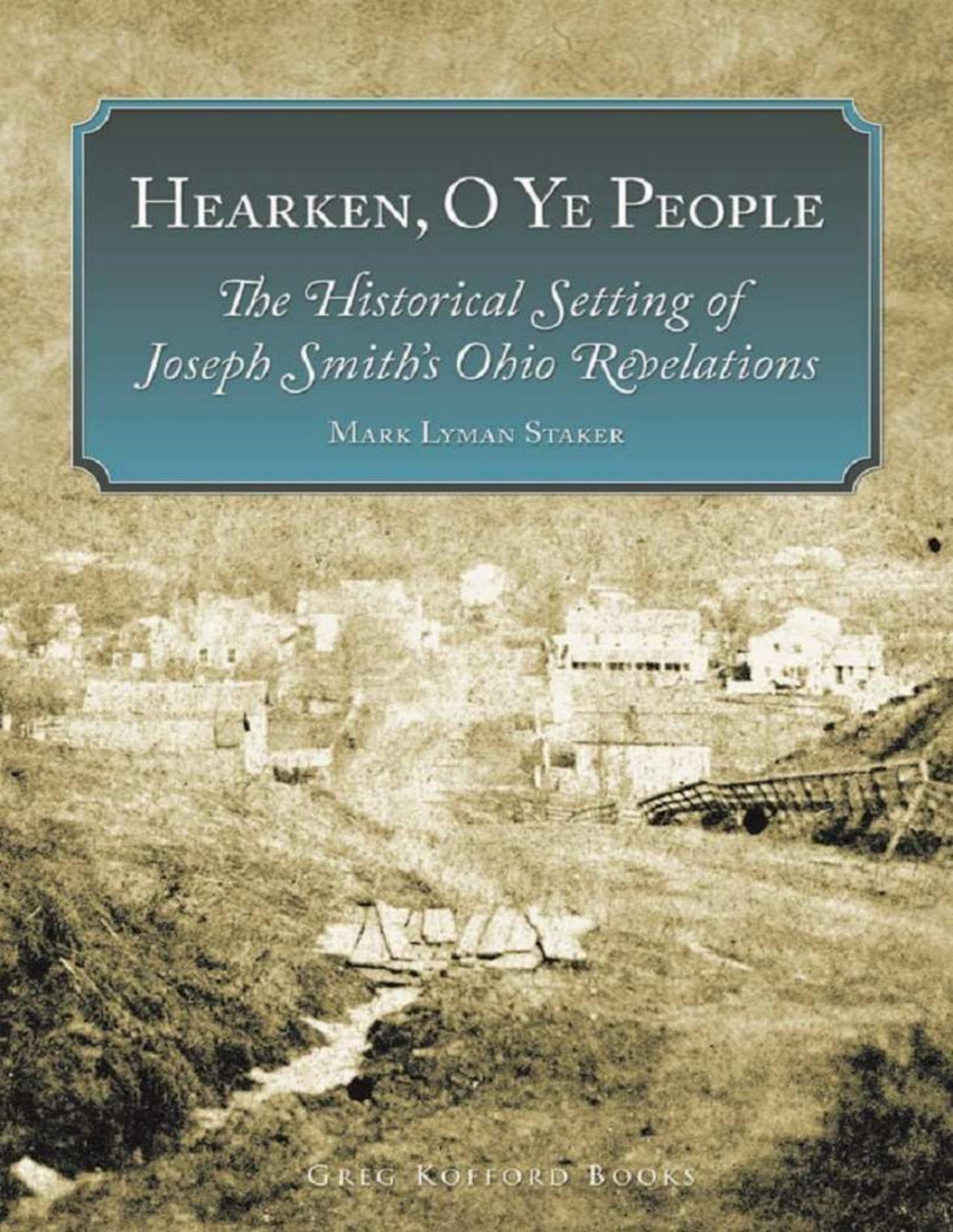
More of Mormonism’s canonized revelations originated in or near Kirtland than any other place. Yet many of the events connected with those revelations and their 1830s historical context have faded over time.Barely twenty-five years after the first of these Ohio revelations, Brigham Young lamented in 1856: “These revelations, after a lapse of years, become mystified [sic] to those who were not personally acquainted with the circumstances at the time they were given.” He gloomily predicted that eventually the revelations “may be as mysterious to our children . . . as the revelations contained in the Old and New Testaments are to this generation.” Now, more than 150 years later, the distance between what Brigham Young and his Kirtland contemporaries considered common knowledge and our understanding of the same material today has widened into a sometimes daunting gap.
Mark Staker narrows the chasm in Hearken, O Ye People by reconstructing the cultural experiences by which Kirtland’s Latter-day Saints made sense of the revelations Joseph Smith pronounced. This volume rebuilds that exciting decade using clues from numerous archives, privately held records, museum collections, and even the soil where early members planted corn and homes. From this vast array of sources he shapes a detailed narrative of weather, religious backgrounds, dialect differences, race relations, theological discussions, food preparation, frontier violence, astronomical phenomena, and myriad daily customs of nineteenth-century life. The result is a “from the ground up” experience that today’s Latter-day Saints can all but walk into and touch.