Most ebook files are in PDF format, so you can easily read them using various software such as Foxit Reader or directly on the Google Chrome browser.
Some ebook files are released by publishers in other formats such as .awz, .mobi, .epub, .fb2, etc. You may need to install specific software to read these formats on mobile/PC, such as Calibre.
Please read the tutorial at this link: https://ebookbell.com/faq
We offer FREE conversion to the popular formats you request; however, this may take some time. Therefore, right after payment, please email us, and we will try to provide the service as quickly as possible.
For some exceptional file formats or broken links (if any), please refrain from opening any disputes. Instead, email us first, and we will try to assist within a maximum of 6 hours.
EbookBell Team
5.0
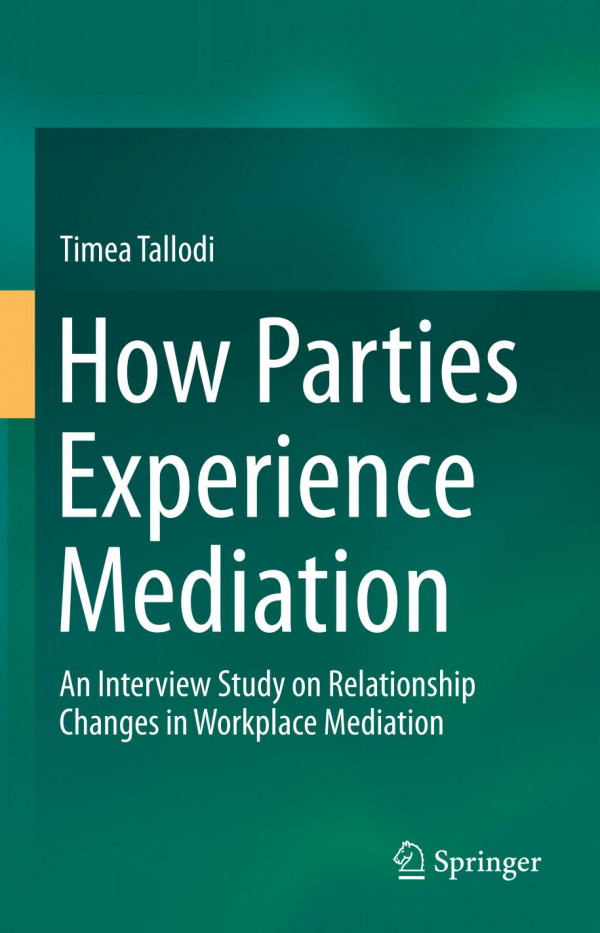
78 reviewsThis book presents an unprecedented qualitative research study on relational changes in mediation with a truly interdisciplinary outset, drawing on the literature on psychology, alternative dispute resolution and business. Mediation's potential to induce changes in parties' relationships as an advantage of the process is commonly mentioned in the literature. However, despite its being a key to reconciliation, relational changes in mediation has not yet been a topic of foundational and fine-grained qualitative enquiry.
As the first study in the literature, this research uses in-depth interviews with mediation parties and the qualitative methodology of interpretative phenomenological analysis in order to explore participants' lived experiences. The phenomenological stance ensures a particularly rich data set and a nuanced interpretative analysis. This pioneering piece of research seeks to enter mediation parties' true experiences as closely as possible, moving beyond pre-existing theoretical, quantitative and large-scale qualitative explorations.The themes are discussed in the context of theory, research and practice. Therefore, this book advances knowledge about mediation both in theoretical and practical terms. Innovative conclusions and recommendations are provided for developing mediation practice, mediation training programmes, and further research.