logo

EbookBell.com

Most ebook files are in PDF format, so you can easily read them using various software such as Foxit Reader or directly on the Google Chrome browser.
Some ebook files are released by publishers in other formats such as .awz, .mobi, .epub, .fb2, etc. You may need to install specific software to read these formats on mobile/PC, such as Calibre.

Please read the tutorial at this link:  https://ebookbell.com/faq 


We offer FREE conversion to the popular formats you request; however, this may take some time. Therefore, right after payment, please email us, and we will try to provide the service as quickly as possible.


For some exceptional file formats or broken links (if any), please refrain from opening any disputes. Instead, email us first, and we will try to assist within a maximum of 6 hours.

EbookBell Team
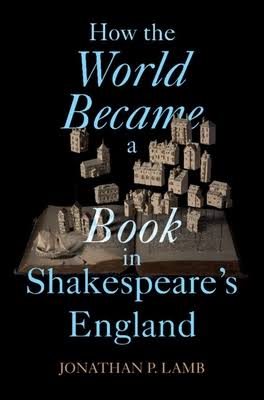
How The World Became A Book In Shakespeares England 1st Jonathan P Lamb

  • SKU: BELL-238388204
How The World Became A Book In Shakespeares England 1st Jonathan P Lamb
$ 35.00 $ 45.00 (-22%)

4.0

6 reviews

How The World Became A Book In Shakespeares England 1st Jonathan P Lamb instant download after payment.

Publisher: Cambridge University Press
File Extension: PDF
File size: 17.47 MB
Pages: 325
Author: Jonathan P. Lamb
ISBN: 9781009460415, 1009460412
Language: English
Year: 2025
Edition: 1st
Volume: -

Product desciption

How The World Became A Book In Shakespeares England 1st Jonathan P Lamb by Jonathan P. Lamb 9781009460415, 1009460412 instant download after payment.

Human beings build their worlds using metaphors. Just as computer
technology has inaugurated a massive metaphorical transformation
in the present era, in which we can “reboot” social causes or “program”
human behavior, books spawned new metaphorical worlds
in newly print-savvy early modern England. Pamphleteers appealed
to books to stage political attacks, preachers formulated theological
claims using metaphors of page and binding, and scientists claimed
to leaf through the “Book of Nature.” Jonathan P. Lamb shows how,
far from offering a mere linguistic tool, this astonishingly broad
lexicon
taught entire cultures how to imagine, giving early modern
writers
– from Shakespeare to Cavendish, and from the famous to the
anonymous – the language to describe and reshape the worlds around
them. This book reveals how, at a scale beyond anything scholars
have imagined, bookish language shaped religious, political, racial,
scientific, and literary questions that remain alive today.

Related Products