logo

EbookBell.com

Most ebook files are in PDF format, so you can easily read them using various software such as Foxit Reader or directly on the Google Chrome browser.
Some ebook files are released by publishers in other formats such as .awz, .mobi, .epub, .fb2, etc. You may need to install specific software to read these formats on mobile/PC, such as Calibre.

Please read the tutorial at this link:  https://ebookbell.com/faq 


We offer FREE conversion to the popular formats you request; however, this may take some time. Therefore, right after payment, please email us, and we will try to provide the service as quickly as possible.


For some exceptional file formats or broken links (if any), please refrain from opening any disputes. Instead, email us first, and we will try to assist within a maximum of 6 hours.

EbookBell Team
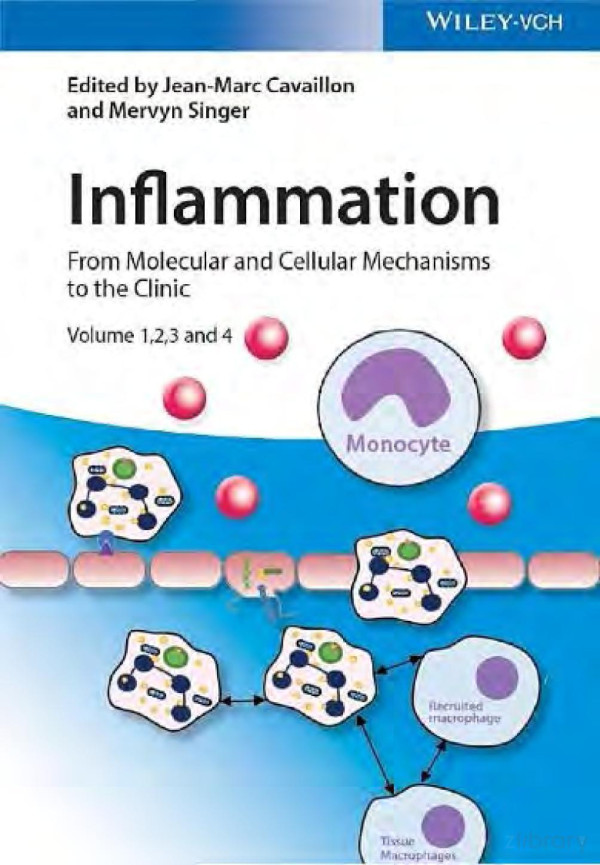
Inflammation From Molecular And Cellular Mechanism To The Clinic 4 In 1 Volume Set Jean Marc Cavaillon Editor

  • SKU: BELL-233195514
Inflammation From Molecular And Cellular Mechanism To The Clinic 4 In 1 Volume Set Jean Marc Cavaillon Editor
$ 35.00 $ 45.00 (-22%)

4.7

66 reviews

Inflammation From Molecular And Cellular Mechanism To The Clinic 4 In 1 Volume Set Jean Marc Cavaillon Editor instant download after payment.

Publisher: Wiley-VCH
File Extension: PDF
File size: 12.23 MB
Author: Jean Marc Cavaillon (Editor)
Language: English
Year: 2018

Product desciption

Inflammation From Molecular And Cellular Mechanism To The Clinic 4 In 1 Volume Set Jean Marc Cavaillon Editor by Jean Marc Cavaillon (editor) instant download after payment.

Inflammation is older than humanity itself. Indeed, the earliest signs of inflam­
matory processes can be found on the bones of dinosaurs. Inflammation has
always been integral to humans as the key process that protects against sterile or
infectious insults. By the end of the eighteenth century, John Hunter was among
the first to define inflammation as a salutary function, a concept endorsed 100
years later by Elie Metchnikoff. To limit the side effects of inflammation, the use
of herbal anti-inflammatory was introduced in China (2800 BC) and Egypt (1520
BC), well before Hippocrates. Bloodletting was another therapeutic approach
widely supported for some 2000 years. While natural products remain an
important source of new anti-inflammatory drugs, bloodletting has been recog­
nized to be powerless!Nowadays, the beneficial effects of inflammation are well recognized when
associated with the overlapping innate immune response. In recent years,
molecular and cellular players have been well characterized and their precise
interactions better understood. New molecular mechanisms have been deci­
phered such as the inflammasome and epigenetics. However, the word inflam­
mation remains mainly associated with disease. Indeed, many chronic
inflammatory disorders have been identified as severe debilitating diseases
that may even favor the emergence of certain cancers. Deciphering the molecular
and cellular events underlying inflammation has enabled development of new
drugs that have revolutionized treatment and outcomes of some of these
disorders.Major achievements have been made in the last few decades allowing new
understanding of the cross-talk between immune and nonimmune cells (e.g.,
cytokines, neuromediators, and eicosanoids) and in the resolution of inflamma­
tion

Related Products