logo

EbookBell.com

Most ebook files are in PDF format, so you can easily read them using various software such as Foxit Reader or directly on the Google Chrome browser.
Some ebook files are released by publishers in other formats such as .awz, .mobi, .epub, .fb2, etc. You may need to install specific software to read these formats on mobile/PC, such as Calibre.

Please read the tutorial at this link:  https://ebookbell.com/faq 


We offer FREE conversion to the popular formats you request; however, this may take some time. Therefore, right after payment, please email us, and we will try to provide the service as quickly as possible.


For some exceptional file formats or broken links (if any), please refrain from opening any disputes. Instead, email us first, and we will try to assist within a maximum of 6 hours.

EbookBell Team
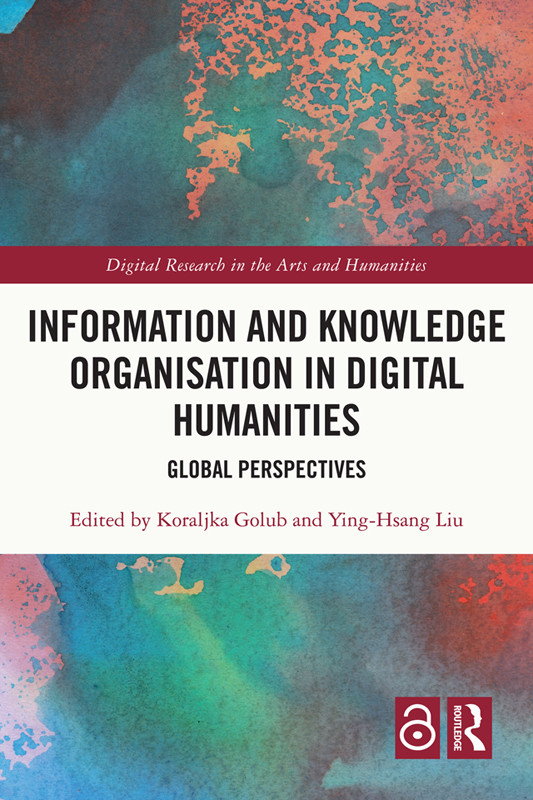
Information And Knowledge Organisation In Digital Humanities Global Perspectives Koraljka Golub Yinghsang Liu

  • SKU: BELL-237354006
Information And Knowledge Organisation In Digital Humanities Global Perspectives Koraljka Golub Yinghsang Liu
$ 35.00 $ 45.00 (-22%)

4.3

8 reviews

Information And Knowledge Organisation In Digital Humanities Global Perspectives Koraljka Golub Yinghsang Liu instant download after payment.

Publisher: Routledge
File Extension: EPUB
File size: 1.74 MB
Author: Koraljka Golub & Ying-Hsang Liu
Language: English
Year: 2021

Product desciption

Information And Knowledge Organisation In Digital Humanities Global Perspectives Koraljka Golub Yinghsang Liu by Koraljka Golub & Ying-hsang Liu instant download after payment.

Information and Knowledge Organisation explores the role of knowledge organisation in the digital humanities. By focusing on how information is described, represented and organised in both research and practice, this work furthers the transdisciplinary nature of digital humanities.Including contributions from Asia, Australia, Europe, North America and the Middle East, the volume explores the potential uses of, and challenges involved in, applying the organisation of information and knowledge in the various areas of Digital Humanities. With a particular focus on the digital worlds of cultural heritage collections, the book also includes chapters that focus on machine learning, knowledge graphs, text analysis, text annotations, and network analysis. Other topics covered include: semantic technologies, conceptual schemas, and data augmentation, digital scholarly editing, metadata creation, browsing, visualisation and relevance ranking. Most importantly, perhaps, the book provides a starting point for discussions about the impact of information and knowledge organisation and related tools on the methodologies used in the Digital Humanities field. Information and Knowledge Organisation is intended for use by researchers, students and professionals interested in the role information and knowledge organisation plays in the Digital Humanities. It will be essential reading for those working in library and information science, computer science and across the humanities.