logo

EbookBell.com

Most ebook files are in PDF format, so you can easily read them using various software such as Foxit Reader or directly on the Google Chrome browser.
Some ebook files are released by publishers in other formats such as .awz, .mobi, .epub, .fb2, etc. You may need to install specific software to read these formats on mobile/PC, such as Calibre.

Please read the tutorial at this link:  https://ebookbell.com/faq 


We offer FREE conversion to the popular formats you request; however, this may take some time. Therefore, right after payment, please email us, and we will try to provide the service as quickly as possible.


For some exceptional file formats or broken links (if any), please refrain from opening any disputes. Instead, email us first, and we will try to assist within a maximum of 6 hours.

EbookBell Team
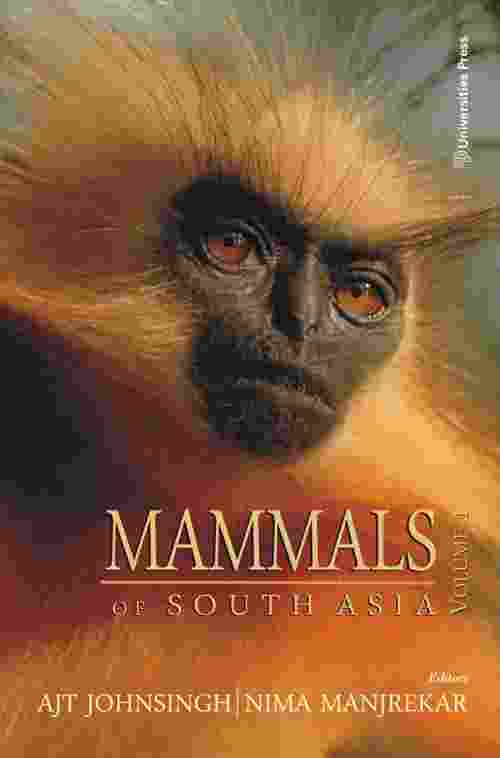
Mammals Of South Asia Volume I 1st Edition A J T Johnsingh And Nima Manjrekar

  • SKU: BELL-233198096
Mammals Of South Asia Volume I 1st Edition A J T Johnsingh And Nima Manjrekar
$ 35.00 $ 45.00 (-22%)

5.0

58 reviews

Mammals Of South Asia Volume I 1st Edition A J T Johnsingh And Nima Manjrekar instant download after payment.

Publisher: Universities Press (india) Private Limited
File Extension: EPUB
File size: 3.24 MB
Pages: 766
Author: A J T Johnsingh and Nima Manjrekar
ISBN: 9788173718144, 9788173715907, 8173718148, 8173715904
Language: English
Year: 2012
Edition: 1

Product desciption

Mammals Of South Asia Volume I 1st Edition A J T Johnsingh And Nima Manjrekar by A J T Johnsingh And Nima Manjrekar 9788173718144, 9788173715907, 8173718148, 8173715904 instant download after payment.

In 1963, my wife, two small sons, and I moved to Kanha National Park in Madhya Pradesh to study cheetal, sambar, swamp deer, gaur, and others, as well as their principal predator, the tiger. There, wandering over meadows and through sal forests, I recorded group size and composition of each species, tallied food plants, and noted the age and sex of prey killed by tigers; in general, I gathered the many small facts that would lead toward an understanding of this marvellous community of large mammals. I was also entranced and excited by Kanha National Park because it offered a glimpse into India’s past with its habitats, wildlife, and Baiga people still living more or less in harmony, much as A Dunbar Brander described them in his book Wild Animals of Central India (1923), one of the best of many hunting accounts that had appeared during the previous hundred years.

I had read many of these books to glean information about the habits of the various species that I had come to study. There were interesting anecdotes, unsubstantiated generalisations, and frequent observations along the barrel of a rifle, but all too little dependable information about animals leading natural lives. Various compendia, starting with T Jerdon’s The Mammals of India (1874) through R Pocock’s The Fauna of British India: Mammalia (1939) to SH Prater’s The Book of Indian Animals (1948) give information on taxonomy, describe various species, offer comments on habitat, often add some personal reminiscences and quotes from earlier accounts. But yet again the books have little detail about the ecology and behaviour of species, and I realised that little was actually known about South Asia’s mammals.

Related Products