Most ebook files are in PDF format, so you can easily read them using various software such as Foxit Reader or directly on the Google Chrome browser.
Some ebook files are released by publishers in other formats such as .awz, .mobi, .epub, .fb2, etc. You may need to install specific software to read these formats on mobile/PC, such as Calibre.
Please read the tutorial at this link: https://ebookbell.com/faq
We offer FREE conversion to the popular formats you request; however, this may take some time. Therefore, right after payment, please email us, and we will try to provide the service as quickly as possible.
For some exceptional file formats or broken links (if any), please refrain from opening any disputes. Instead, email us first, and we will try to assist within a maximum of 6 hours.
EbookBell Team
4.4
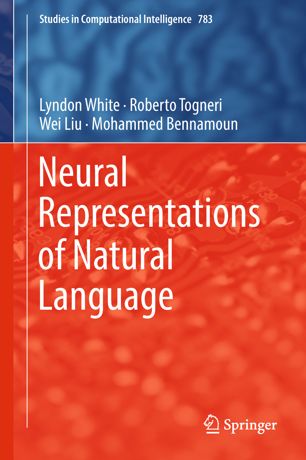
12 reviewsThis book offers an introduction to modern natural language processing using machine learning, focusing on how neural networks create a machine interpretable representation of the meaning of natural language. Language is crucially linked to ideas – as Webster’s 1923 “English Composition and Literature” puts it: “A sentence is a group of words expressing a complete thought”. Thus the representation of sentences and the words that make them up is vital in advancing artificial intelligence and other “smart” systems currently being developed. Providing an overview of the research in the area, from Bengio et al.’s seminal work on a “Neural Probabilistic Language Model” in 2003, to the latest techniques, this book enables readers to gain an understanding of how the techniques are related and what is best for their purposes. As well as a introduction to neural networks in general and recurrent neural networks in particular, this book details the methods used for representing words, senses of words, and larger structures such as sentences or documents. The book highlights practical implementations and discusses many aspects that are often overlooked or misunderstood. The book includes thorough instruction on challenging areas such as hierarchical softmax and negative sampling, to ensure the reader fully and easily understands the details of how the algorithms function. Combining practical aspects with a more traditional review of the literature, it is directly applicable to a broad readership. It is an invaluable introduction for early graduate students working in natural language processing; a trustworthy guide for industry developers wishing to make use of recent innovations; and a sturdy bridge for researchers already familiar with linguistics or machine learning wishing to understand the other.