Most ebook files are in PDF format, so you can easily read them using various software such as Foxit Reader or directly on the Google Chrome browser.
Some ebook files are released by publishers in other formats such as .awz, .mobi, .epub, .fb2, etc. You may need to install specific software to read these formats on mobile/PC, such as Calibre.
Please read the tutorial at this link: https://ebookbell.com/faq
We offer FREE conversion to the popular formats you request; however, this may take some time. Therefore, right after payment, please email us, and we will try to provide the service as quickly as possible.
For some exceptional file formats or broken links (if any), please refrain from opening any disputes. Instead, email us first, and we will try to assist within a maximum of 6 hours.
EbookBell Team
0.0
0 reviewsAuthor: Nature Neuroscience
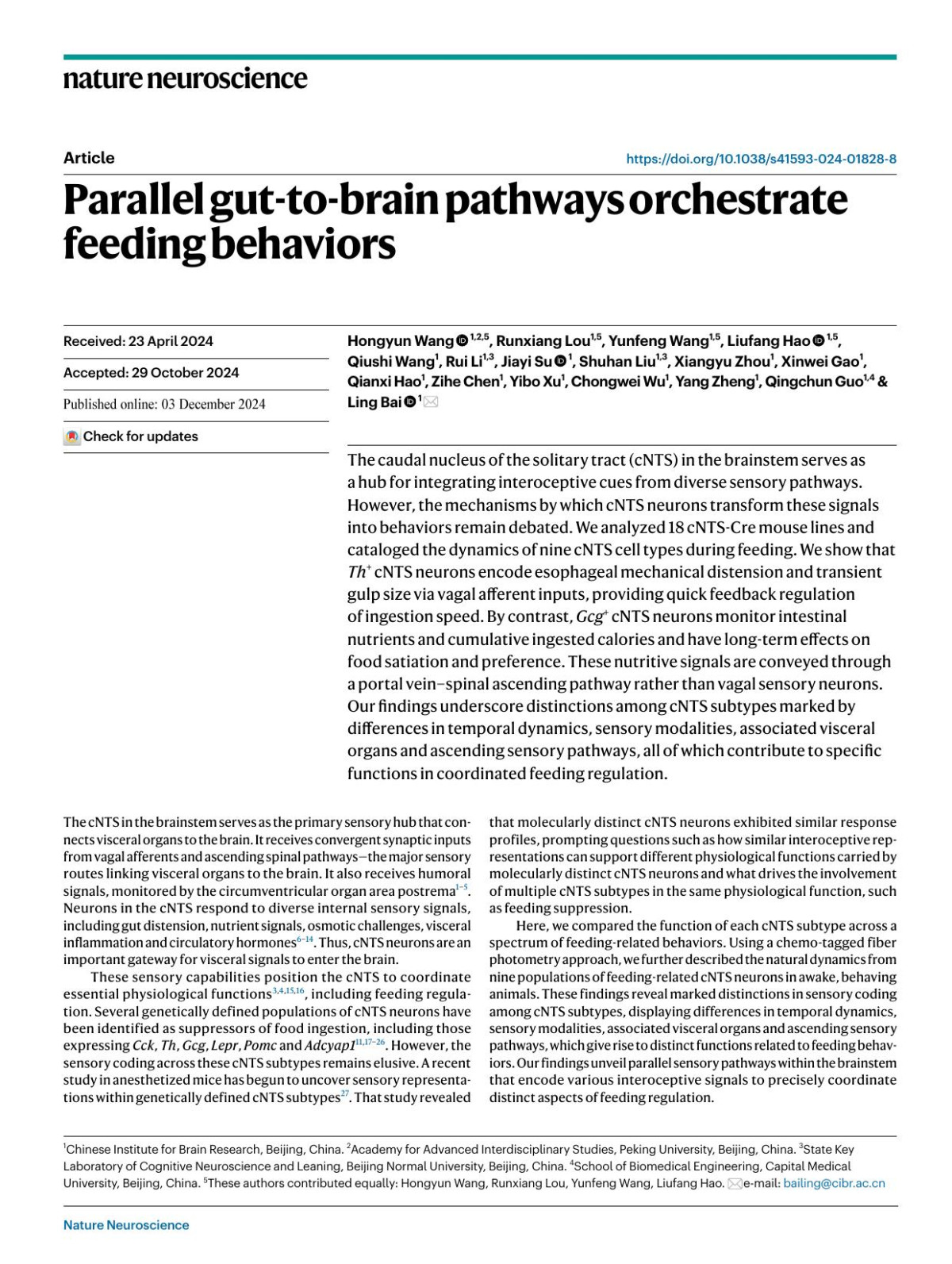
The caudal nucleus of the solitary tract (cNTS) in the brainstem serves as a hub for integrating interoceptive cues from diverse sensory pathways. However, the mechanisms by which cNTS neurons transform these signals into behaviors remain debated. We analyzed 18 cNTS-Cre mouse lines and cataloged the dynamics of nine cNTS cell types during feeding. We show that Th+ cNTS neurons encode esophageal mechanical distension and transient gulp size via vagal afferent inputs, providing quick feedback regulation of ingestion speed. By contrast, Gcg+ cNTS neurons monitor intestinal nutrients and cumulative ingested calories and have long-term effects on food satiation and preference. These nutritive signals are conveyed through a portal vein–spinal ascending pathway rather than vagal sensory neurons. Our findings underscore distinctions among cNTS subtypes marked by differences in temporal dynamics, sensory modalities, associated visceral organs and ascending sensory pathways, all of which contribute to specific functions in coordinated feeding regulation.
gut brain axis feeding
nature neuroscience feeding behavior
gut to brain neural pathways
neuroscience of appetite
feeding behavior brain research
Tags: Parallel, brain pathways, orchestrate, feeding behaviors, Nature Neoroscience