logo

EbookBell.com

Most ebook files are in PDF format, so you can easily read them using various software such as Foxit Reader or directly on the Google Chrome browser.
Some ebook files are released by publishers in other formats such as .awz, .mobi, .epub, .fb2, etc. You may need to install specific software to read these formats on mobile/PC, such as Calibre.

Please read the tutorial at this link:  https://ebookbell.com/faq 


We offer FREE conversion to the popular formats you request; however, this may take some time. Therefore, right after payment, please email us, and we will try to provide the service as quickly as possible.


For some exceptional file formats or broken links (if any), please refrain from opening any disputes. Instead, email us first, and we will try to assist within a maximum of 6 hours.

EbookBell Team
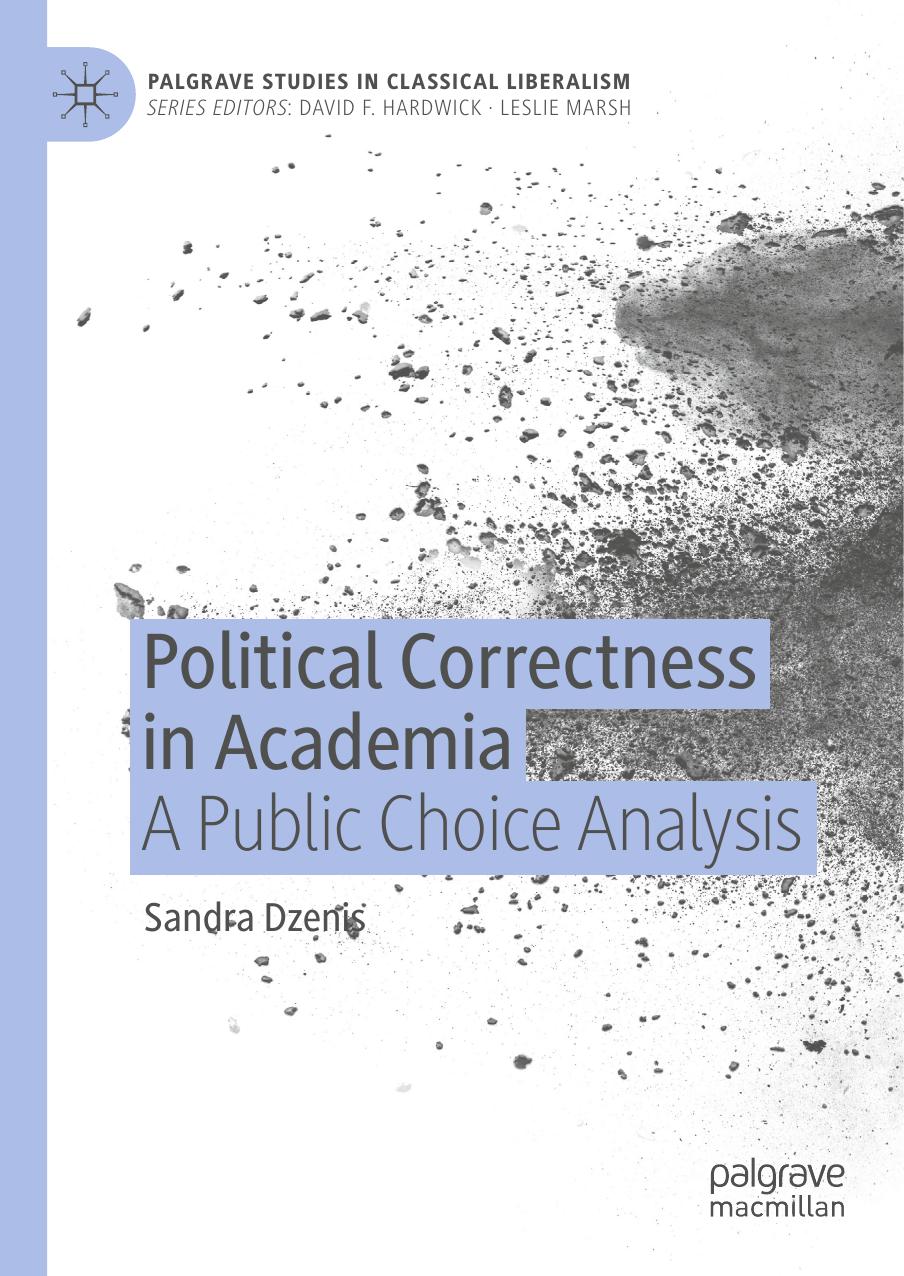
Political Correctness In Academia 1st Sandra Dzenis

  • SKU: BELL-236605922
Political Correctness In Academia 1st Sandra Dzenis
$ 35.00 $ 45.00 (-22%)

0.0

0 reviews

Political Correctness In Academia 1st Sandra Dzenis instant download after payment.

Publisher: Palgrave Macmillan
File Extension: PDF
File size: 4.79 MB
Pages: 256
Author: Sandra Dzenis
ISBN: 9783031854507, 3031854500
Language: English
Year: 2025
Edition: 1st
Volume: -

Product desciption

Political Correctness In Academia 1st Sandra Dzenis by Sandra Dzenis 9783031854507, 3031854500 instant download after payment.

This book explores the phenomenon of political correctness in academia and explains why and how scholars and administrators impact PC’s prominence in the academic sphere. To do so, it examines the actions of these agents through the lens of public choice theory, revealing how self-interested strategies drive the policies and norms of the university.
The book examines the ideological dimensions of political correctness and highlights four key spheres of influence – academic research, higher education curricula, affirmative action and speech codes. The book offers a nuanced exploration of how PC and liberalism have common ground. It demonstrates how the liberal values of equality and individual liberty largely underpin PC, whose regulatory function is to protect a liberal value system from illiberal truth claims. Yet the book also shows how interest groups form around the concept of PC in universities and have successfully used systems of rent-seeking and collective action to shape institutional policy and protect their members from ideological and professional competition, which can be seen as a violation of classical liberal principles of fair competition and equal opportunity. This book is a valuable tool for researchers working in political economy and PPE (politics, philosophy and economics), as well as those interested in the political economy of academia and the concept of PC more generally.

Related Products