Most ebook files are in PDF format, so you can easily read them using various software such as Foxit Reader or directly on the Google Chrome browser.
Some ebook files are released by publishers in other formats such as .awz, .mobi, .epub, .fb2, etc. You may need to install specific software to read these formats on mobile/PC, such as Calibre.
Please read the tutorial at this link: https://ebookbell.com/faq
We offer FREE conversion to the popular formats you request; however, this may take some time. Therefore, right after payment, please email us, and we will try to provide the service as quickly as possible.
For some exceptional file formats or broken links (if any), please refrain from opening any disputes. Instead, email us first, and we will try to assist within a maximum of 6 hours.
EbookBell Team
0.0
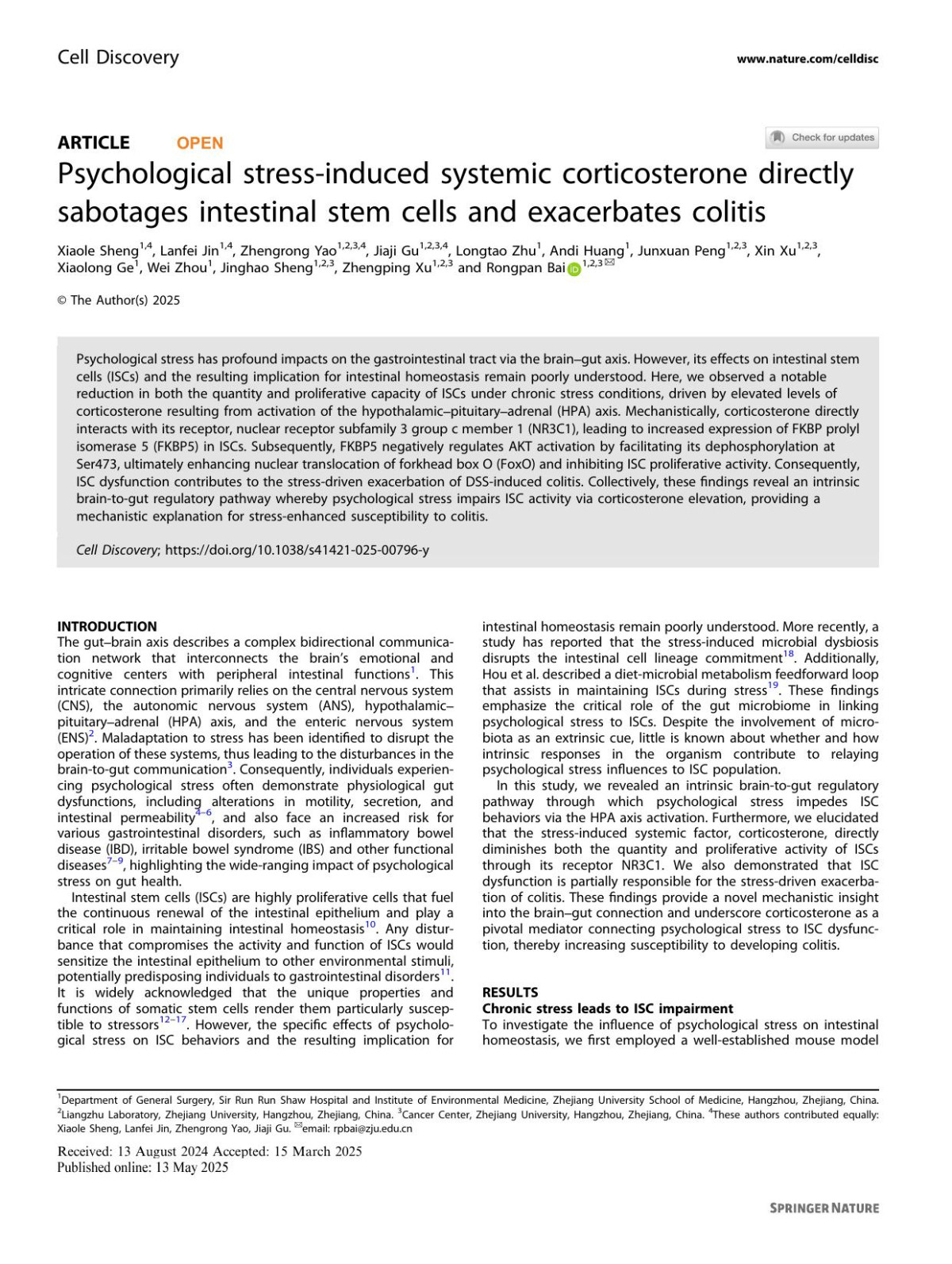
0 reviewsPsychological stress has profound impacts on the gastrointestinal tract via the brain‒gut axis. However, its effects on intestinal stemcells (ISCs) and the resulting implication for intestinal homeostasis remain poorly understood. Here, we observed a notablereduction in both the quantity and proliferative capacity of ISCs under chronic stress conditions, driven by elevated levels ofcorticosterone resulting from activation of the hypothalamic‒pituitary‒adrenal (HPA) axis. Mechanistically, corticosterone directlyinteracts with its receptor, nuclear receptor subfamily 3 group c member 1 (NR3C1), leading to increased expression of FKBP prolylisomerase 5 (FKBP5) in ISCs. Subsequently, FKBP5 negatively regulates AKT activation by facilitating its dephosphorylation atSer473, ultimately enhancing nuclear translocation of forkhead box O (FoxO) and inhibiting ISC proliferative activity. Consequently,1234567890();,:ISC dysfunction contributes to the stress-driven exacerbation of DSS-induced colitis. Collectively, these findings reveal an intrinsicbrain-to-gut regulatory pathway whereby psychological stress impairs ISC activity via corticosterone elevation, providing amechanistic explanation for stress-enhanced susceptibility to colitis.Cell Discovery;