logo

EbookBell.com

Most ebook files are in PDF format, so you can easily read them using various software such as Foxit Reader or directly on the Google Chrome browser.
Some ebook files are released by publishers in other formats such as .awz, .mobi, .epub, .fb2, etc. You may need to install specific software to read these formats on mobile/PC, such as Calibre.

Please read the tutorial at this link:  https://ebookbell.com/faq 


We offer FREE conversion to the popular formats you request; however, this may take some time. Therefore, right after payment, please email us, and we will try to provide the service as quickly as possible.


For some exceptional file formats or broken links (if any), please refrain from opening any disputes. Instead, email us first, and we will try to assist within a maximum of 6 hours.

EbookBell Team
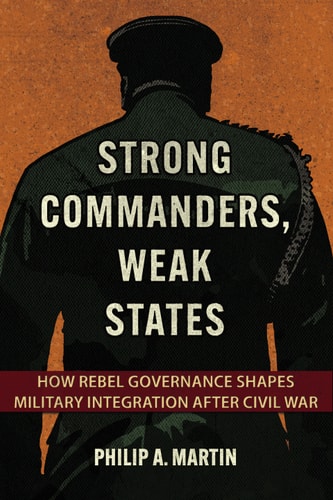
Strong Commanders Weak States How Rebel Governance Shapes Military Integration After Civil War 2nd Edition Philip A Martin

  • SKU: BELL-233837060
Strong Commanders Weak States How Rebel Governance Shapes Military Integration After Civil War 2nd Edition Philip A Martin
$ 35.00 $ 45.00 (-22%)

0.0

0 reviews

Strong Commanders Weak States How Rebel Governance Shapes Military Integration After Civil War 2nd Edition Philip A Martin instant download after payment.

Publisher: Cornell University Press
File Extension: PDF
File size: 2.61 MB
Pages: 247
Author: Philip A. Martin
ISBN: 9781501779022, 9781501779039, 1501779028, 1501779036
Language: English
Year: 2025
Edition: 2

Product desciption

Strong Commanders Weak States How Rebel Governance Shapes Military Integration After Civil War 2nd Edition Philip A Martin by Philip A. Martin 9781501779022, 9781501779039, 1501779028, 1501779036 instant download after payment.

In Strong Commanders, Weak States, Philip A. Martin investigates a fundamental political challenge faced by post-conflict states: how to create obedient national militaries from the remnants of insurgent forces. When civil wars end, non-state armed groups often integrate into post-conflict militaries. Yet rebel-military integration does not always happen smoothly. In some cases, former rebels cooperate with new leaders, forming powerful national armies that underpin postwar stability. In others, they resist the authority of new leaders, maintaining clandestine armed networks that disrupt centralized state-building. Martin argues that how field commanders of non-state armed groups governed during the war explains this variation. Rebel commanders who build accountable governance systems gain strong social support from rebel-ruled communities, becoming locally embedded. Thanks to these community ties, which persist after the war, these embedded commanders have the leverage to push the central government for concessions, resist directives to disarm fighters, or even orchestrate coup d'états. Conversely, rebel commanders who governed coercively are less likely to sustain community ties. Without the ability to mobilize collective action after the war, these non-embedded commanders have stronger incentives to cooperate with new regime leaders. Wielding in-depth evidence from Côte d'Ivoire and cases of rebel-military integration elsewhere, Martin shows that good governance during wartime can—ironically—lead to poor postwar state consolidation. Rather than preparing insurgents to be successful state builders, effective rebel governance can hinder post-conflict state-building. As costly peace operations come under increasing scrutiny, Strong Commanders, Weak States offers fresh guidance on how transitions to peace can better succeed.

Related Products