logo

EbookBell.com

Most ebook files are in PDF format, so you can easily read them using various software such as Foxit Reader or directly on the Google Chrome browser.
Some ebook files are released by publishers in other formats such as .awz, .mobi, .epub, .fb2, etc. You may need to install specific software to read these formats on mobile/PC, such as Calibre.

Please read the tutorial at this link:  https://ebookbell.com/faq 


We offer FREE conversion to the popular formats you request; however, this may take some time. Therefore, right after payment, please email us, and we will try to provide the service as quickly as possible.


For some exceptional file formats or broken links (if any), please refrain from opening any disputes. Instead, email us first, and we will try to assist within a maximum of 6 hours.

EbookBell Team
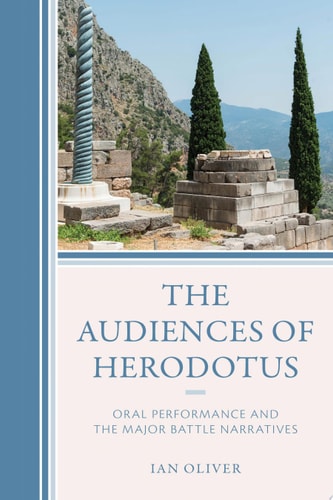
The Audiences Of Herodotus Oral Performance And The Major Battle Narratives 1st Edition Ian Oliver

  • SKU: BELL-239787524
The Audiences Of Herodotus Oral Performance And The Major Battle Narratives 1st Edition Ian Oliver
$ 35.00 $ 45.00 (-22%)

4.0

66 reviews

The Audiences Of Herodotus Oral Performance And The Major Battle Narratives 1st Edition Ian Oliver instant download after payment.

Publisher: Bloomsbury Publishing USA
File Extension: PDF
File size: 2.05 MB
Pages: 199
Author: Ian Oliver
ISBN: 9781978773721, 1978773722
Language: English
Year: 2025
Edition: 1

Product desciption

The Audiences Of Herodotus Oral Performance And The Major Battle Narratives 1st Edition Ian Oliver by Ian Oliver 9781978773721, 1978773722 instant download after payment.

By recognizing the pervasive influence that Herodotus’s career as an oral performer had on his composition of the Histories, The Audiences of Herodotus: Oral Performance and the Battle Narratives argues that the Histories’ versions of the three most important battles in the Persian Wars—the battles of Thermopylae, Salamis, and Plataea—persistently and disproportionately advance the interests, biases, and political agendas of distinct audiences in the mid-fifth century, well before Herodotus assembled his famous work of history as it survives to us. The Salamis and Plataea narratives reflect a mid-century audience of Athenians and their allies; the Thermopylae narrative reflects an Amphictyonic audience gathered at the Pythian Festival. Ian Oliver concludes that, as a participant in a culture of wisdom performance (epideixis), Herodotus originally composed short, ideologically motivated performance pieces that he intended to promote tendentious reinterpretations of these momentous events, then relied on these narratives when he composed his final text: the unitary Histories.