logo

EbookBell.com

Most ebook files are in PDF format, so you can easily read them using various software such as Foxit Reader or directly on the Google Chrome browser.
Some ebook files are released by publishers in other formats such as .awz, .mobi, .epub, .fb2, etc. You may need to install specific software to read these formats on mobile/PC, such as Calibre.

Please read the tutorial at this link:  https://ebookbell.com/faq 


We offer FREE conversion to the popular formats you request; however, this may take some time. Therefore, right after payment, please email us, and we will try to provide the service as quickly as possible.


For some exceptional file formats or broken links (if any), please refrain from opening any disputes. Instead, email us first, and we will try to assist within a maximum of 6 hours.

EbookBell Team
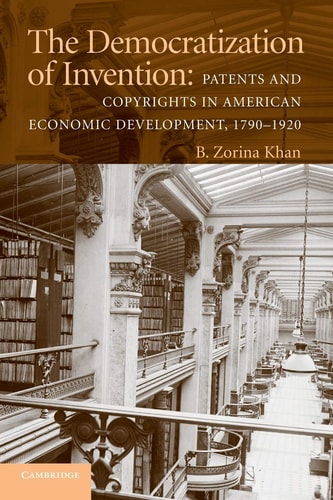
The Democratization Of Invention Patents And Copyrights In American Economic Development 17901920 1st Edition B Zorina Khan

  • SKU: BELL-237624234
The Democratization Of Invention Patents And Copyrights In American Economic Development 17901920 1st Edition B Zorina Khan
$ 35.00 $ 45.00 (-22%)

4.7

26 reviews

The Democratization Of Invention Patents And Copyrights In American Economic Development 17901920 1st Edition B Zorina Khan instant download after payment.

Publisher: Cambridge University Press
File Extension: PDF
File size: 27.21 MB
Pages: 337
Author: B. Zorina Khan
ISBN: 9780521747202, 0521747201, 978052I811354, 052I81135X
Language: English
Year: 2009
Edition: 1

Product desciption

The Democratization Of Invention Patents And Copyrights In American Economic Development 17901920 1st Edition B Zorina Khan by B. Zorina Khan 9780521747202, 0521747201, 978052I811354, 052I81135X instant download after payment.

An Examination of the evolution and impact of American intellectual property rights during the 'long nineteenth century,' this book compares the American system to developments in the more oligarchic societies of France and Britain. The United States created the first modern patent system and its policies were the most liberal in the world toward inventors. Individuals who did not have the resources to directly exploit their inventions benefited disproportionately from secure property rights and the operation of efficient markets. When markets expanded, these inventors contributed to the proliferation of new technologies and improvements. In contrast to its leadership in the area of patents, the US copyright regime was among the weakest in the world, in keeping with its utilitarian objective of promoting the general welfare. American patent and copyright institutions promoted a process of democratization that not only furthered economic and technological progress but also provided a conduit for the creativity and achievements of disadvantaged groups.