Product desciption
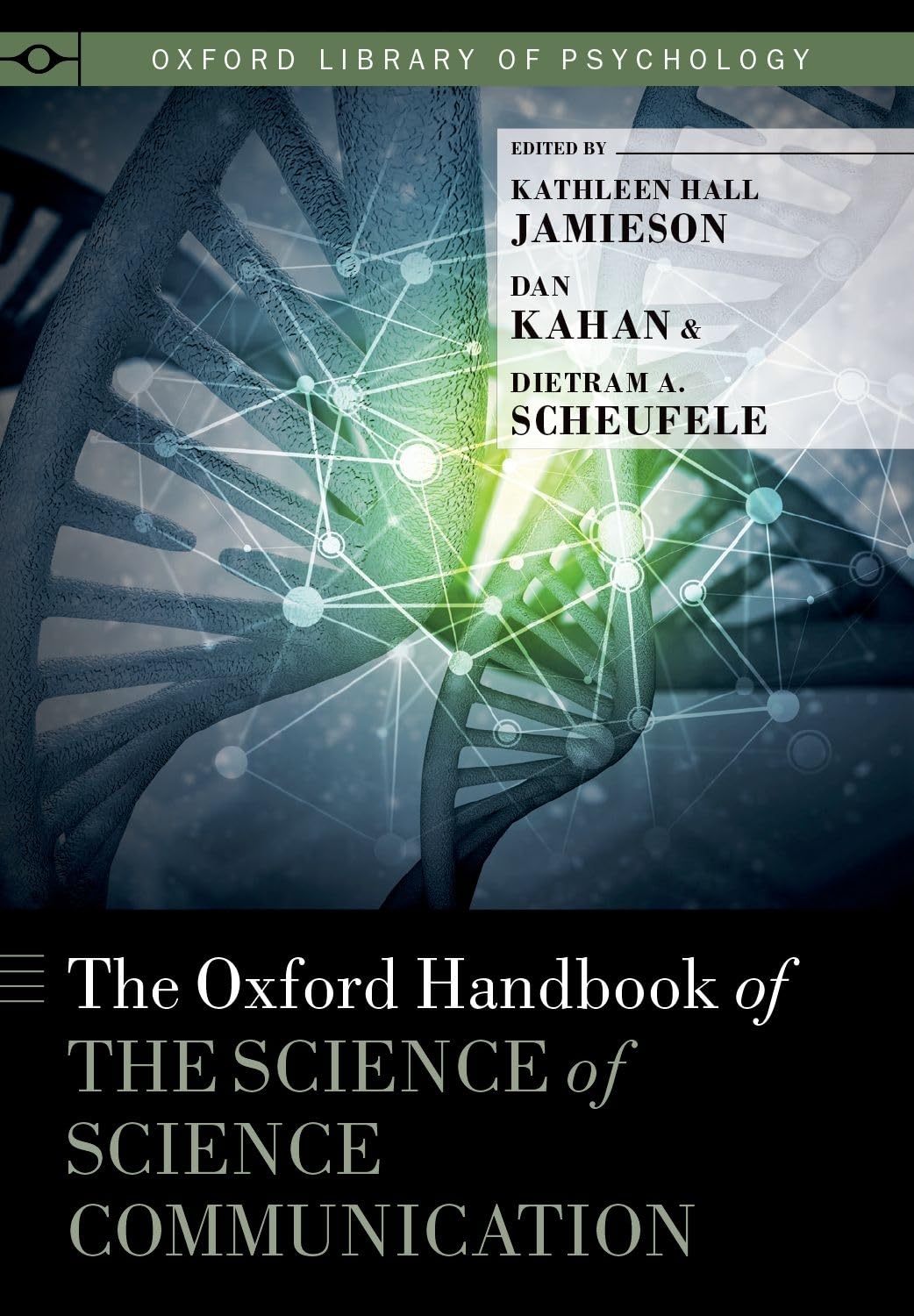
The Oxford Handbook Of The Science Of Science Communication 1st Kathleen Hall Jamieson by Kathleen Hall Jamieson, Dan Kahan, Dietram A. Scheufele 9780190683436, 0190683430 instant download after payment.
The cross-disciplinary Oxford Handbook on the Science of Science Communication contains 47 essays by 57 leading scholars organized into six sections: The first section establishes the need for a science of science communication, provides an overview of the area, examines sources of science knowledge and the ways in which changing media structures affect it, reveals what the public thinks about science, and situates current scientific controversies in their historical contexts. The book’s second part examines challenges to science including difficulties in peer review, rising numbers of retractions, publication and statistical biases, and hype. Successes and failures in communicating about four controversies are the subject of Part III: “mad cow,” nanotechnology, biotechnology, and the HPV and HBV vaccines. The fourth section focuses on the ways in which elite intermediaries communicate science. These include the national academies, scholarly presses, government organizations, museums, foundations, and social networks. It examines as well scientific deliberation among citizens and science-based policymaking. In Part V, the handbook treats science media interactions, knowledge-based journalism, polarized media environments, popular images of science, and the portrayal of science in entertainment, narratives, and comedy. The final section identifies the ways in which human biases that can affect communicated science can be overcome. Biases include resistant misinformation, inadequate frames, biases in moral reasoning, confirmation and selective exposure biases, innumeracy, recency effects, fear of the unnatural, normalization, false causal attribution, and public difficulty in processing uncertainty. Each section of the book includes a thematic synthesis.