logo

EbookBell.com

Most ebook files are in PDF format, so you can easily read them using various software such as Foxit Reader or directly on the Google Chrome browser.
Some ebook files are released by publishers in other formats such as .awz, .mobi, .epub, .fb2, etc. You may need to install specific software to read these formats on mobile/PC, such as Calibre.

Please read the tutorial at this link:  https://ebookbell.com/faq 


We offer FREE conversion to the popular formats you request; however, this may take some time. Therefore, right after payment, please email us, and we will try to provide the service as quickly as possible.


For some exceptional file formats or broken links (if any), please refrain from opening any disputes. Instead, email us first, and we will try to assist within a maximum of 6 hours.

EbookBell Team
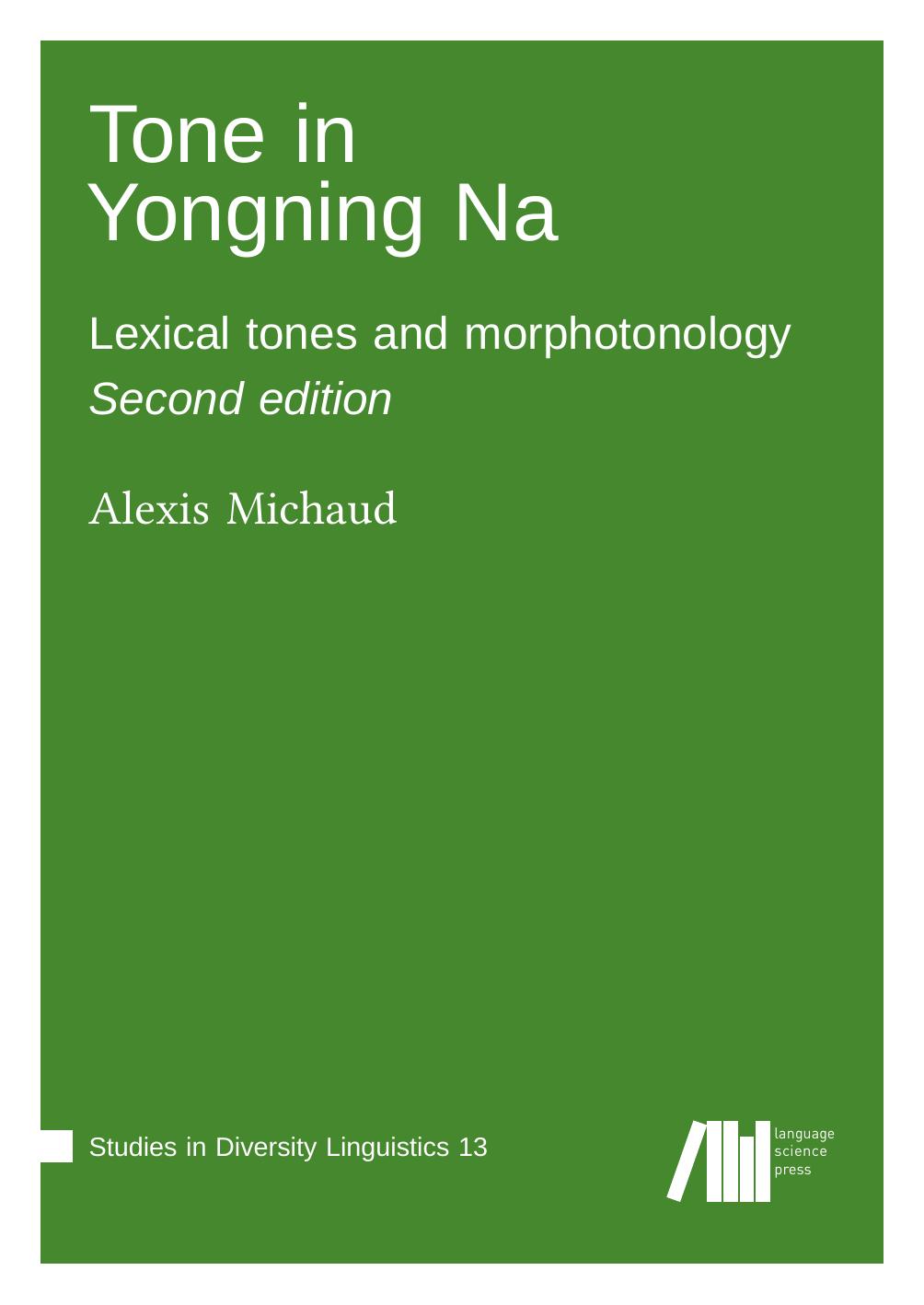
Tone In Yongning Na Lexical Tones And Morphotonology 1st Edition Alexis Michaud

  • SKU: BELL-239414906
Tone In Yongning Na Lexical Tones And Morphotonology 1st Edition Alexis Michaud
$ 35.00 $ 45.00 (-22%)

4.3

58 reviews

Tone In Yongning Na Lexical Tones And Morphotonology 1st Edition Alexis Michaud instant download after payment.

Publisher: Language Science Press
File Extension: PDF
File size: 11.83 MB
Pages: 661
Author: Alexis Michaud
ISBN: 9783961105090, 396110509X
Language: English
Year: 2025
Edition: 1

Product desciption

Tone In Yongning Na Lexical Tones And Morphotonology 1st Edition Alexis Michaud by Alexis Michaud 9783961105090, 396110509X instant download after payment.

Yongning Na, also known as Mosuo, is a Sino-Tibetan language spoken in Southwest China. This book provides a description and analysis of its tone system, progressing from lexical tones towards morphotonology. Tonal changes permeate numerous aspects of the morphosyntax of Yongning Na. They are not the product of a small set of phonological rules, but of a host of rules that are restricted to specific morphosyntactic contexts. Rich morphotonological systems have been reported in this area of Sino-Tibetan, but book-length descriptions remain few. This study of an endangered language contributes to a better understanding of the diversity of prosodic systems in East Asia.

The analysis is based on original fieldwork data (made available online), collected over the course of ten years, commencing in 2006.

Related Products