logo

EbookBell.com

Most ebook files are in PDF format, so you can easily read them using various software such as Foxit Reader or directly on the Google Chrome browser.
Some ebook files are released by publishers in other formats such as .awz, .mobi, .epub, .fb2, etc. You may need to install specific software to read these formats on mobile/PC, such as Calibre.

Please read the tutorial at this link:  https://ebookbell.com/faq 


We offer FREE conversion to the popular formats you request; however, this may take some time. Therefore, right after payment, please email us, and we will try to provide the service as quickly as possible.


For some exceptional file formats or broken links (if any), please refrain from opening any disputes. Instead, email us first, and we will try to assist within a maximum of 6 hours.

EbookBell Team
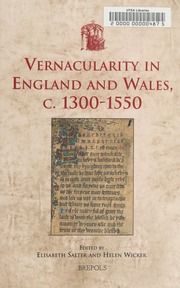
Vernacularity In England And Wales C 13001550 Salter Elisabeth

  • SKU: BELL-238737832
Vernacularity In England And Wales C 13001550 Salter Elisabeth
$ 35.00 $ 45.00 (-22%)

4.8

24 reviews

Vernacularity In England And Wales C 13001550 Salter Elisabeth instant download after payment.

Publisher: Turnhout : Brepols
File Extension: PDF
File size: 18.23 MB
Author: Salter, Elisabeth, 1972-; Wicker, Helen
Language: English
Year: 2011

Product desciption

Vernacularity In England And Wales C 13001550 Salter Elisabeth by Salter, Elisabeth, 1972-; Wicker, Helen instant download after payment.

vi, 335 p. : 25 cm, Studies of the vernacular in the period 1300-1550 have tended to focus exclusively upon language, to the exception of the wider vernacular culture within which this was located. The essays in this collection draw upon a wide range of source material, including buildings, devotional and educational literature, and parliamentary and civic records, in order to expand and elaborate our idea of the vernacular. Each contributor addresses central ideas about the nature and identity of the vernacular and how we appraise it, involving questions about nationhood, popularity, the commonalty, and the conflict and conjunction of the vernacular with the non-vernacular. These notions of vernacularity are situated within studies of reading practices, heresy, translation, gentry identity, seditious speech, and language politics. By considering the nature of vernacularity, these essays explore whether it is possible to perceive a common theory of vernacular use and practice at this time, Includes bibliographical references

Related Products