logo

EbookBell.com

Most ebook files are in PDF format, so you can easily read them using various software such as Foxit Reader or directly on the Google Chrome browser.
Some ebook files are released by publishers in other formats such as .awz, .mobi, .epub, .fb2, etc. You may need to install specific software to read these formats on mobile/PC, such as Calibre.

Please read the tutorial at this link:  https://ebookbell.com/faq 


We offer FREE conversion to the popular formats you request; however, this may take some time. Therefore, right after payment, please email us, and we will try to provide the service as quickly as possible.


For some exceptional file formats or broken links (if any), please refrain from opening any disputes. Instead, email us first, and we will try to assist within a maximum of 6 hours.

EbookBell Team
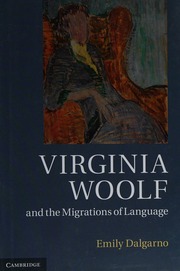
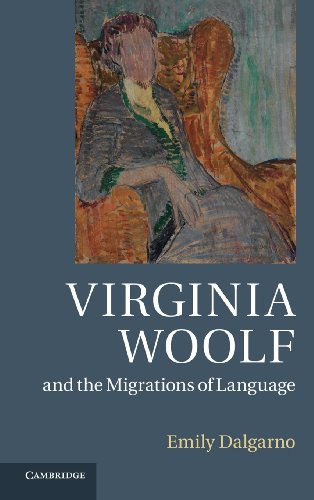
Virginia Woolf And The Migrations Of Language Dalgarno Emily

  • SKU: BELL-238738112
Virginia Woolf And The Migrations Of Language Dalgarno Emily
$ 35.00 $ 45.00 (-22%)

4.8

64 reviews

Virginia Woolf And The Migrations Of Language Dalgarno Emily instant download after payment.

Publisher: Cambridge ; New York : Cambridge University Press
File Extension: PDF
File size: 13.79 MB
Author: Dalgarno, Emily
Language: English
Year: 2012

Product desciption

Virginia Woolf And The Migrations Of Language Dalgarno Emily by Dalgarno, Emily instant download after payment.

xi, 215 p. ; 24 cm, \"Virginia Woolf's rich and imaginative use of language was partly a result of her keen interest in foreign literatures and languages - mainly Greek and French, but also Russian, German and Italian. As a translator she naturally addressed herself both to contemporary standards of translation within the university, but also to readers like herself. In Three Guineas she ranged herself among German scholars who used Antigone to critique European politics of the 1930s. Orlando outwits the censors with a strategy that focuses on Proust's untranslatable word. The Waves and The Years show her looking ahead to the problems of postcolonial society, where translation crosses borders. In this first in-depth study of Woolf and European languages and literatures, Emily Dalgarno opens up a rewarding new way of reading her prose\"--, \"The need to change the structure of the English sentence in order better to meet the requirements of women writers is a constant theme in the work of Virginia Woolf. She wrote during a period when the goals of translation were undergoing fundamental changes that enlarged and facilitated that project. The British translator who was compelled to observe the ethnocentric standards of Greek translation in the university evolved within a few decades into a figure whose aim, in response to the demands of colonial readers, was to mediate between cultures. It is the argument of this book that although Woolf read translations to acquaint herself with the diverse cultures of the world, as a writer she quickly learned to use translation as a means to resist the tendency of the dominant language to control meaning, the first step to remodeling semantics and syntax\"--, Includes bibliographical references (p. 196-211) and index, Machine generated contents note: Introduction; 1. Translation and ethnography in 'On Not Knowing Greek'; 2. Antigone and the public language; 3. Tolstoy, Dostoyevsky, and the Russian soul; 4. Proust and the fictions…

Related Products