logo

EbookBell.com

Most ebook files are in PDF format, so you can easily read them using various software such as Foxit Reader or directly on the Google Chrome browser.
Some ebook files are released by publishers in other formats such as .awz, .mobi, .epub, .fb2, etc. You may need to install specific software to read these formats on mobile/PC, such as Calibre.

Please read the tutorial at this link:  https://ebookbell.com/faq 


We offer FREE conversion to the popular formats you request; however, this may take some time. Therefore, right after payment, please email us, and we will try to provide the service as quickly as possible.


For some exceptional file formats or broken links (if any), please refrain from opening any disputes. Instead, email us first, and we will try to assist within a maximum of 6 hours.

EbookBell Team
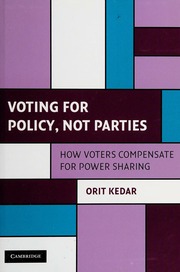
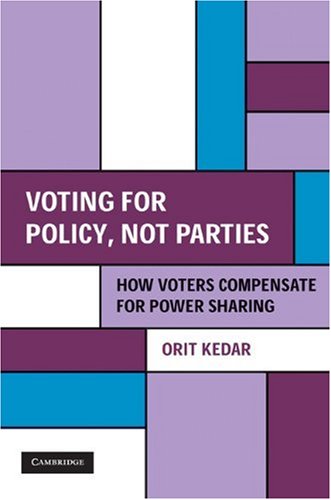
Voting For Policy Not Parties How Voters Compensate For Power Sharing None Kedar

  • SKU: BELL-238716474
Voting For Policy Not Parties How Voters Compensate For Power Sharing None Kedar
$ 35.00 $ 45.00 (-22%)

4.7

46 reviews

Voting For Policy Not Parties How Voters Compensate For Power Sharing None Kedar instant download after payment.

Publisher: New York : Cambridge University Press
File Extension: PDF
File size: 10.15 MB
Author: Kedar, Orit, None
Language: English
Year: 2009

Product desciption

Voting For Policy Not Parties How Voters Compensate For Power Sharing None Kedar by Kedar, Orit, None instant download after payment.

xiv, 220 pages : 24 cm, This book proposes an institutionally embedded framework for analyzing voter choice. Voters, Orit Kedar argues, are concerned with policy, and therefore their vote reflects the path set by political institutions leading from votes to policy. Under this framework, the more institutional mechanisms facilitating post-electoral compromise are built into the political process (e.g., multi-party government), the more voters compensate for the dilution of their vote. This simple but overlooked principle allows Kedar to explain a broad array of seemingly unrelated electoral regularities and offer a unified framework of analysis, which she terms compensatory vote. Kedar develops the compensatory logic in three electoral arenas: parliamentary, presidential, and federal. Leveraging on institutional variation in the degree of power sharing, she analyzes voter choice, conducting an empirical analysis that brings together institutional and behavioral data in a broad cross section of elections in democracies, Includes bibliographical references and index, Voting for policy. Introduction: institutional sources of voter choice ; A theory of compensatory vote -- Empirical evidence: how voters compensate for diffusion of power. Compensatory vote in parliamentary democracies ; Balancing strong (and weak) presidents ; Compensatory vote in federations: evidence from Germany -- Theoretical implications

Related Products