Most ebook files are in PDF format, so you can easily read them using various software such as Foxit Reader or directly on the Google Chrome browser.
Some ebook files are released by publishers in other formats such as .awz, .mobi, .epub, .fb2, etc. You may need to install specific software to read these formats on mobile/PC, such as Calibre.
Please read the tutorial at this link: https://ebookbell.com/faq
We offer FREE conversion to the popular formats you request; however, this may take some time. Therefore, right after payment, please email us, and we will try to provide the service as quickly as possible.
For some exceptional file formats or broken links (if any), please refrain from opening any disputes. Instead, email us first, and we will try to assist within a maximum of 6 hours.
EbookBell Team
4.7
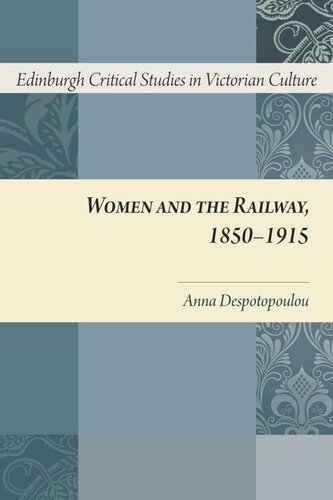
16 reviewsExamining the representation of women in the spaces of the railway in literature and culture of the nineteenth and early twentieth centuries, this book explores the extraordinary and unprecedented opportunities that the train offered women. An emblem of the conquest of national and imperial space and of the staggering advances of science and technology, the train gave women a taste of its omnipotence, eventually becoming a space of emancipation, transgression, and fear for women. The book brings together the sensation, mystery, realist and early modernist railway narratives by female and male authors, analysing women’s trajectories within and beyond the city and the nation, as urban passengers, travellers, tourists and colonists.
In texts by authors such as Mary Elizabeth Braddon, Margaret Oliphant, Rhoda Broughton, Mary Ward, Flora Annie Steel and Mona Caird as well as Wilkie Collins, Thomas Hardy and Henry James, the ambiguous space of the railway highlights the artificiality of the private/public divide, while giving rise to woman’s impulse to traverse boundaries, not only physically but also mentally and emotionally. In the novels, short stories in periodicals, news items and commentaries, essays, illustrations and paintings examined, trains become contact zones of multiple encounters, but also battlefields of gender, class and imperial ideology.