logo

EbookBell.com

Most ebook files are in PDF format, so you can easily read them using various software such as Foxit Reader or directly on the Google Chrome browser.
Some ebook files are released by publishers in other formats such as .awz, .mobi, .epub, .fb2, etc. You may need to install specific software to read these formats on mobile/PC, such as Calibre.

Please read the tutorial at this link:  https://ebookbell.com/faq 


We offer FREE conversion to the popular formats you request; however, this may take some time. Therefore, right after payment, please email us, and we will try to provide the service as quickly as possible.


For some exceptional file formats or broken links (if any), please refrain from opening any disputes. Instead, email us first, and we will try to assist within a maximum of 6 hours.

EbookBell Team
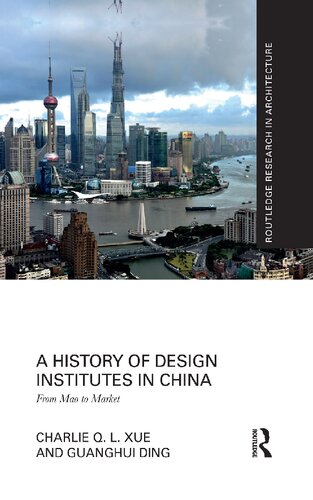
A History Of Design Institutes In China From Mao To Market Charlie Q L Xue Guanghui Ding

  • SKU: BELL-10995520
A History Of Design Institutes In China From Mao To Market Charlie Q L Xue Guanghui Ding
$ 35.00 $ 45.00 (-22%)

0.0

0 reviews

A History Of Design Institutes In China From Mao To Market Charlie Q L Xue Guanghui Ding instant download after payment.

Publisher: Routledge
File Extension: PDF
File size: 4.11 MB
Pages: 230
Author: Charlie Q. L. Xue; Guanghui Ding
ISBN: 9781351356787, 135135678X
Language: English
Year: 2018

Product desciption

A History Of Design Institutes In China From Mao To Market Charlie Q L Xue Guanghui Ding by Charlie Q. L. Xue; Guanghui Ding 9781351356787, 135135678X instant download after payment.

A History of Design Institutes in China examines the intricate relationship between design institutes, the state, and, in later periods, the market economy through a carefully situated discussion of significant theoretical and historical issues including socialist utopia, collective and individual design, structural transformation, and architectural exportation, amongst others. It shows how, over the past six decades, China’s design institutes have served the state’s strategy for socialist construction and urbanisation to create socioeconomic and cultural value. Through first-hand research, authors Xue and Ding reveal how the tensions between pragmatism, creativity, collaboration, and resistance have played a crucial role in defining architectural production. Appealing to academics, researchers, and graduate students, this book provides a much-needed contribution to the discourse on architectural history, building practices, and policymaking in contemporary China.

Related Products