Most ebook files are in PDF format, so you can easily read them using various software such as Foxit Reader or directly on the Google Chrome browser.
Some ebook files are released by publishers in other formats such as .awz, .mobi, .epub, .fb2, etc. You may need to install specific software to read these formats on mobile/PC, such as Calibre.
Please read the tutorial at this link: https://ebookbell.com/faq
We offer FREE conversion to the popular formats you request; however, this may take some time. Therefore, right after payment, please email us, and we will try to provide the service as quickly as possible.
For some exceptional file formats or broken links (if any), please refrain from opening any disputes. Instead, email us first, and we will try to assist within a maximum of 6 hours.
EbookBell Team
0.0
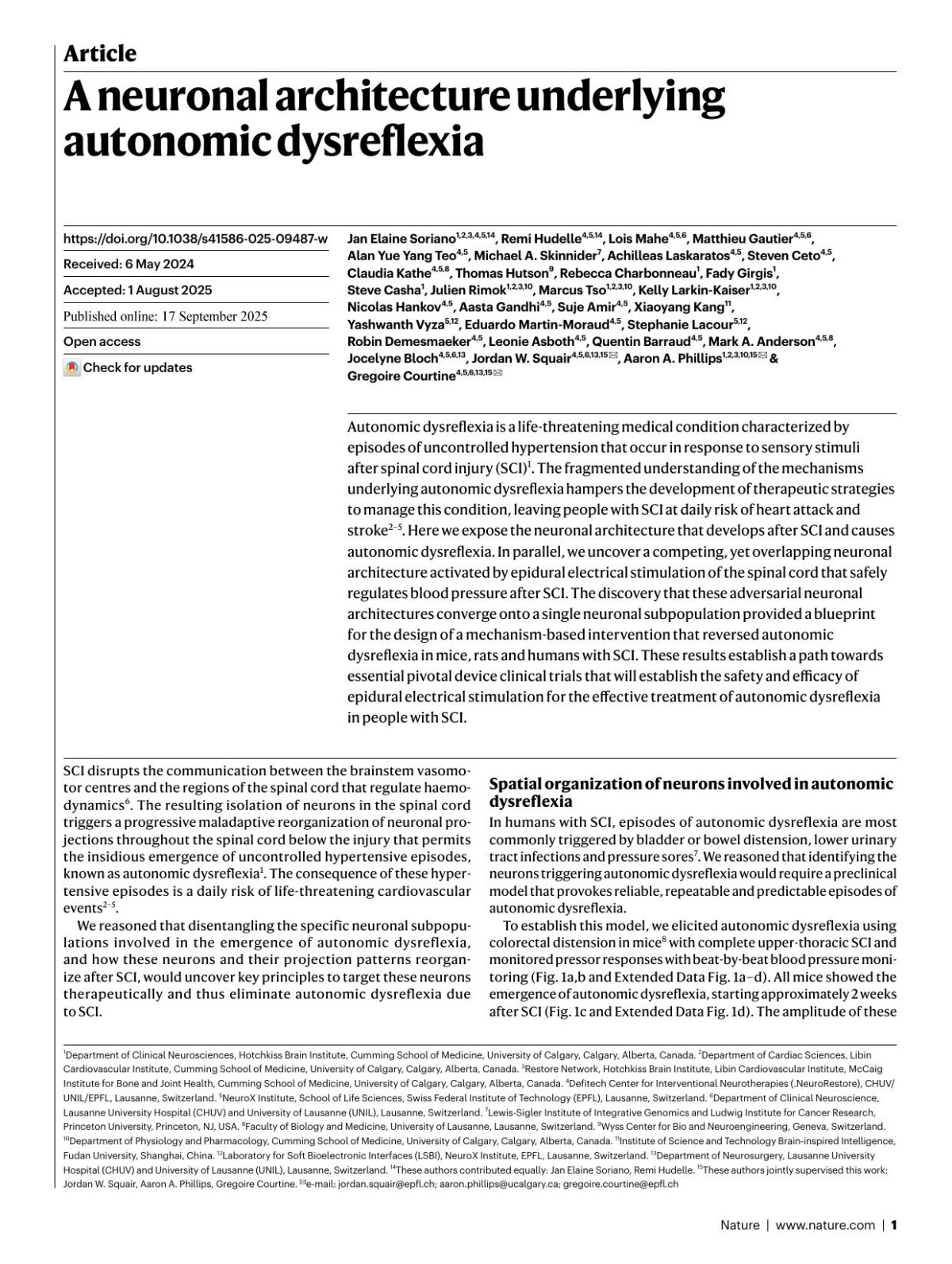
0 reviewsAutonomic dysrefexia is a life-threatening medical condition characterized by episodes of uncontrolled hypertension that occur in response to sensory stimuli after spinal cord injury (SCI)1. The fragmented understanding of the mechanisms underlying autonomic dysrefexia hampers the development of therapeutic strategies to manage this condition, leaving people with SCI at daily risk of heart attack and stroke2–5. Here we expose the neuronal architecture that develops after SCI and causes autonomic dysrefexia. In parallel, we uncover a competing, yet overlapping neuronal architecture activated by epidural electrical stimulation of the spinal cord that safely regulates blood pressure after SCI. The discovery that these adversarial neuronal architectures converge onto a single neuronal subpopulation provided a blueprint for the design of a mechanism-based intervention that reversed autonomic dysrefexia in mice, rats and humans with SCI. These results establish a path towards essential pivotal device clinical trials that will establish the safety and efcacy of epidural electrical stimulation for the efective treatment of autonomic dysrefexia in people with SCI.