Most ebook files are in PDF format, so you can easily read them using various software such as Foxit Reader or directly on the Google Chrome browser.
Some ebook files are released by publishers in other formats such as .awz, .mobi, .epub, .fb2, etc. You may need to install specific software to read these formats on mobile/PC, such as Calibre.
Please read the tutorial at this link: https://ebookbell.com/faq
We offer FREE conversion to the popular formats you request; however, this may take some time. Therefore, right after payment, please email us, and we will try to provide the service as quickly as possible.
For some exceptional file formats or broken links (if any), please refrain from opening any disputes. Instead, email us first, and we will try to assist within a maximum of 6 hours.
EbookBell Team
0.0
0 reviews
ISBN 10: 1635570263
ISBN 13: 9781635570267
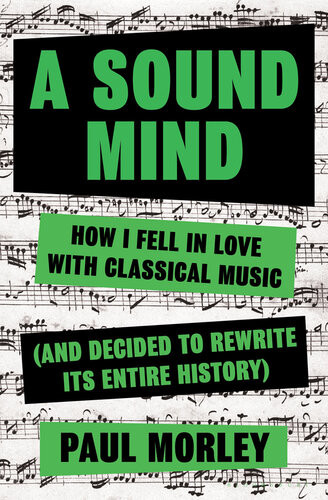
Author: Paul Morley
For readers of Mozart in the Jungle and Year of Wonder, a new history of and guide to classical music.
Paul Morley made his name as a journalist covering the rock and pop of the 1970s and 1980s. But as his career progressed, he found himself drawn toward developing technologies, streaming platforms, and, increasingly, the music from the past that streaming services now made available. Suddenly able to access every piece Mozart or Bach had ever written and to curate playlists that worked with these musicians' themes across different performers, composers, and eras, he began to understand classical music in a whole new way and to believe that it was music at its most dramatic and revealing.
In A Sound Mind, Morley takes readers along on his journey into the history and future of classical music. His descriptions, explanations, and guidance make this seemingly arcane genre more friendly to listeners and show the music's power, depth, and timeless beauty. In Morley's capable hands, the history of the classical genre is shown to be the history of all music, with these long-ago pieces influencing everyone from jazz greats to punk rockers and the pop musicians of today.
Part One The Question – Into the Unknown
An article written about Harry Styles and Jake Bugg by someone with Anton Webern on his mind
Part Two The Learning – What Brought Me Here
1. A Possible New Me
2. How to be a Mature Student; an article written for the Observer Music Monthly
Part Three The Beginning – To The Planets and Beyond
1. On Being a Funky Youngster
2. A first classical experience read out on Radio 3
Beyond The Planets, because there is more to Holst than Mars
3. Further beyond: A brief history of the ‘Classics for Pleasure’ label that somehow leads to ‘From A for Amazon to Z for Zappa’
4. Where the A is for aware, ardent, absurd, astonishing, analytical, alarming, atonal, apeshit, and the Z is still, but never still, for Zappa
5. Ten 1970s Classics for Pleasure albums that should be released as a budget box set, priced ten times the original price of ten shillings and sixpence, the equivalent now of £5.25
Part Four The Playlist – A Few of My Favourite Things
1. The Age of Storage
2. An introduction by a rock critic to some classical music playlists
3. Eight Steps Beyond
1. Mozart – Masonic Funeral Music in C minor
2. Debussy – Sonata for Cello and Piano
3. Berio – Sequenza V
4. Shostakovich – Symphony No. 10
5. Webern – Langsamer Satz
6. Earle Brown – Times Five
7. Sofia Gubaidulina – Sonata for Double Bass and Piano
8. John Cage – Organ2/ASLSP
4. Follow-up to the above: two playlists with notes and recommendations, considering the time Ravel and Debussy spent composing more or less at the same time
Part Five The Writing – Finding the Right Words
1. On Becoming an Insider
2. Crossing over with the classical TV set
3. The art of perseverance
4. The odd ones out on table 29
My top eleven of works commissioned by or dedicated to the RPS would be:
5. The critic as opera diva
6. What plays in Huddersfield plays in Huddersfield
7. The critic as unlikely motivational speaker
8. Above and beyond: the view from Iceland
Part Six 1973, the Year When – A Playlist With Information; The Persistence of Memory
A 1973 playlist with explanations
Part Seven The String Quartet – In Four Parts
1. First movement: sonata form, allegro, in the tonic key
2. Second movement: slow, in the subdominant key
3. Third movement: minuet and trio, in the tonic key
4. Fourth movement: rondo or sonata rondo form, in the tonic key
Part Eight The Obscure – Changing Direction
From the sinking of the titanic as a sustaining avant-garde (classical) masterpiece
Out of, around and under the sinking of the titanic from other directions
how do i know if i fell in love
a sound of mind
b love how i feel
deep sounds fall into my mind
maybe the sound of my heart breaking
what part of the brain falls in love
Tags: Paul Morley, Mind, Sound