Most ebook files are in PDF format, so you can easily read them using various software such as Foxit Reader or directly on the Google Chrome browser.
Some ebook files are released by publishers in other formats such as .awz, .mobi, .epub, .fb2, etc. You may need to install specific software to read these formats on mobile/PC, such as Calibre.
Please read the tutorial at this link: https://ebookbell.com/faq
We offer FREE conversion to the popular formats you request; however, this may take some time. Therefore, right after payment, please email us, and we will try to provide the service as quickly as possible.
For some exceptional file formats or broken links (if any), please refrain from opening any disputes. Instead, email us first, and we will try to assist within a maximum of 6 hours.
EbookBell Team
5.0
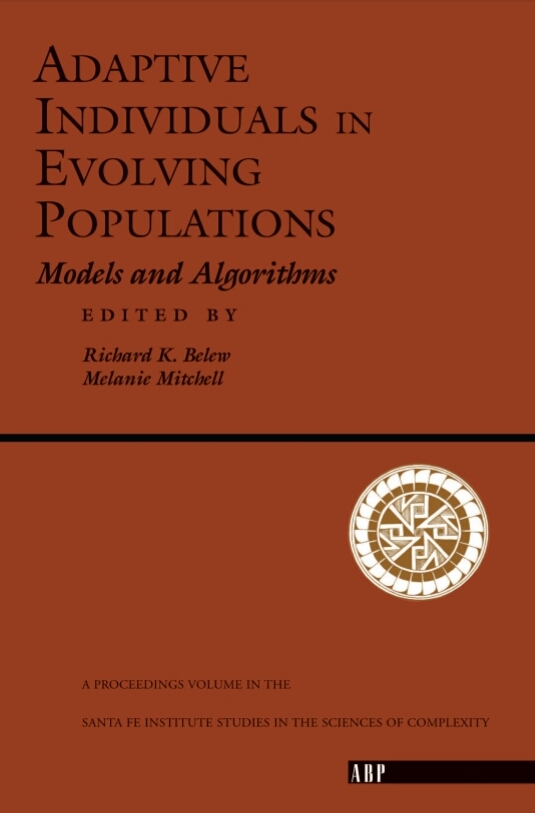
108 reviewsA meeting held at the Santa Fe Institute during the summer of 1993 brought together a small group of biologists, psychologists, and computer scientists with shared interests in questions such as these. This volume consists of papers that explore interacting adaptive systems from a range of interdisciplinary perspectives. About half of the articles are classic, seminal references on the subject, ranging from biologists like Lamarck and Waddington to psychologists like Piaget and Skinner. The other half represent new work by the workshop participants. The role played by mathematical and computational tools, both as models of natural phenomena and as algorithm useful in their own right, is particularly emphasized in these new papers. In all cases the chapters have been augmented by specially written prefaces. In the case of the reprinted classics, the prefaces help to put the older papers in a modern context. For the new papers, the prefaces have been written by colleagues from a discipline other than the paper's authors, and highlight, for example, what a computer scientist can learn from a biologist's model, or vice versa. Through these cross-disciplinary "dialogues" and a glossary collecting multidisciplinary connotations of pivotal terms, the process of interdisciplinary investigation itself becomes a central theme.