Most ebook files are in PDF format, so you can easily read them using various software such as Foxit Reader or directly on the Google Chrome browser.
Some ebook files are released by publishers in other formats such as .awz, .mobi, .epub, .fb2, etc. You may need to install specific software to read these formats on mobile/PC, such as Calibre.
Please read the tutorial at this link: https://ebookbell.com/faq
We offer FREE conversion to the popular formats you request; however, this may take some time. Therefore, right after payment, please email us, and we will try to provide the service as quickly as possible.
For some exceptional file formats or broken links (if any), please refrain from opening any disputes. Instead, email us first, and we will try to assist within a maximum of 6 hours.
EbookBell Team
0.0
0 reviews
ISBN 13: 9781041217541
Author: N. Gokarneshan
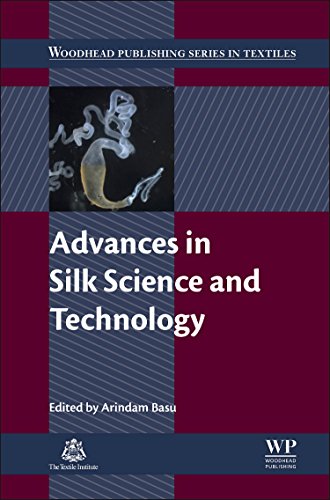
This book provides comprehensive coverage of silk fibre research including mulberry and non-mulberry varieties. It examines chemical treatments, processing variables, and advanced characterization techniques such as SEM, XRD, FTIR, and TGA. Topics covered in this book include graft copolymerization, natural dyeing, nanotechnology applications, spider silk properties, sericin extraction, and mechanical behavior analysis and includes:
The book serves as a reference for researchers investigating silk structure, modification techniques, and industrial applications in textile science.
This title has been co-published with Woodhead Publishers. Taylor & Francis does not sell or distribute the print edition in India, Sri Lanka, Nepal, Bangladesh, Pakistan, and Bhutan.
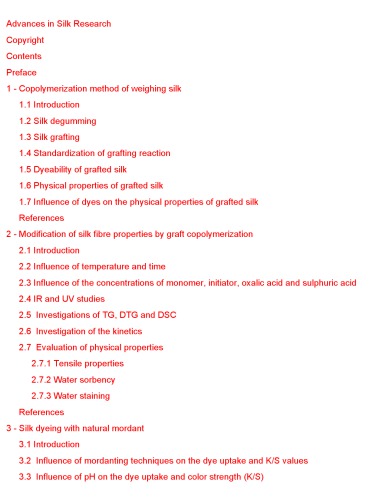
1. Copolymerization method of weighing silk
2. Modification of silk fibre properties by graft copolymerization
3. Silk dyeing with natural mordant
4. Effect of cooking and other treatments on the quality of raw silk
5. Factors influencing quality and reeling performance of multi-bivoltine raw silk cocoons
6. Crystallite-shape ellipsoid of non-mulberry silk fibres
7. Measurement of cohesion is silk yarn
8. Relating the microstructure and microrheological factors of different silk fibres
9. New method of evaluation of low-stress mechanical properties of silk fabrics
10. Kinetics of adsorption of natural dye on silk: Effect of surface modification
11. Woven mulberry silk fabrics: Stretch and growth characteristics
12. Enhancement of coloration and antimicrobial properties of silk fabrics through nanotechnology
13. Influence of electric field on bivoltine mulberry and tasar fibres
14. Torsional rigidity of mulberry and non-mulberry silks
15. A qualitative and quantitative comparison of sericin from various sources
16. Optimization of technological parameters for steeping silk on small reels
17. Drying of silk in re-reeling process by infra red technique
18. Dyeing of silk with bio ecological mordant
19. Influence of laundering and water temperature on the properties of silk and silk-blended knits
20. Physical and thermal properties of grafted silk fabrics
21. Anti-wrinkle properties of silk fabrics dyed with reactive and crosslinking dyes
22. Polyester/waste silk core spun yarns and fabrics
23. Relation between cocoon parameters and raw silk uniformity characteristics
24. Technical aspects of spider silk and applications
25. Morphology studies on electrospun nano silk fibre
26. Technical aspects of silk sericin
27. Application of genetic algorithm for design of silk scaffolds
28. Special technique for the investigation of crystal and molecular structure of muga wild silk
29. Development of silk fabric patterns through new eco-printing method
30. Effect of some key factors on scouring of sericin in muga silk cocoons
advances in silk science and technology
advances in skin cancer
advances in space research quartile
silk research
advances in skin cancer treatment
Tags: Gokarneshan, Advances, research, silk