Most ebook files are in PDF format, so you can easily read them using various software such as Foxit Reader or directly on the Google Chrome browser.
Some ebook files are released by publishers in other formats such as .awz, .mobi, .epub, .fb2, etc. You may need to install specific software to read these formats on mobile/PC, such as Calibre.
Please read the tutorial at this link: https://ebookbell.com/faq
We offer FREE conversion to the popular formats you request; however, this may take some time. Therefore, right after payment, please email us, and we will try to provide the service as quickly as possible.
For some exceptional file formats or broken links (if any), please refrain from opening any disputes. Instead, email us first, and we will try to assist within a maximum of 6 hours.
EbookBell Team
4.4
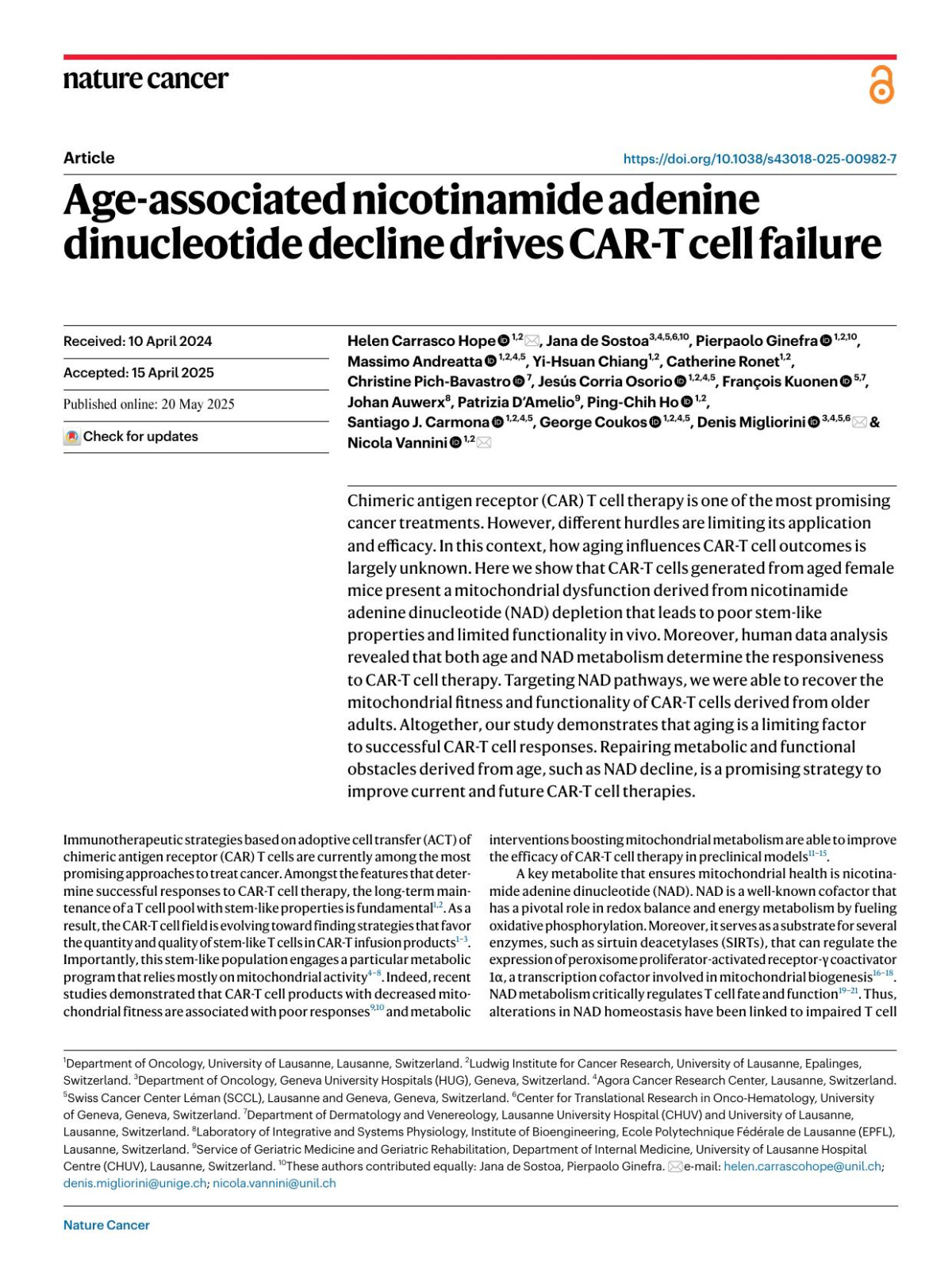
92 reviewsChimeric antigen receptor (CAR) T cell therapy is one of the most promising cancer treatments. However, diferent hurdles are limiting its application and efcacy. In this context, how aging infuences CAR-T cell outcomes is largely unknown. Here we show that CAR-T cells generated from aged female mice present a mitochondrial dysfunction derived from nicotinamide adenine dinucleotide (NAD) depletion that leads to poor stem-like properties and limited functionality in vivo. Moreover, human data analysis revealed that both age and NAD metabolism determine the responsiveness to CAR-T cell therapy. Targeting NAD pathways, we were able to recover the mitochondrial ftness and functionality of CAR-T cells derived from older adults. Altogether, our study demonstrates that aging is a limiting factor to successful CAR-T cell responses. Repairing metabolic and functional obstacles derived from age, such as NAD decline, is a promising strategy to improve current and future CAR-T cell therapies.