logo

EbookBell.com

Most ebook files are in PDF format, so you can easily read them using various software such as Foxit Reader or directly on the Google Chrome browser.
Some ebook files are released by publishers in other formats such as .awz, .mobi, .epub, .fb2, etc. You may need to install specific software to read these formats on mobile/PC, such as Calibre.

Please read the tutorial at this link:  https://ebookbell.com/faq 


We offer FREE conversion to the popular formats you request; however, this may take some time. Therefore, right after payment, please email us, and we will try to provide the service as quickly as possible.


For some exceptional file formats or broken links (if any), please refrain from opening any disputes. Instead, email us first, and we will try to assist within a maximum of 6 hours.

EbookBell Team
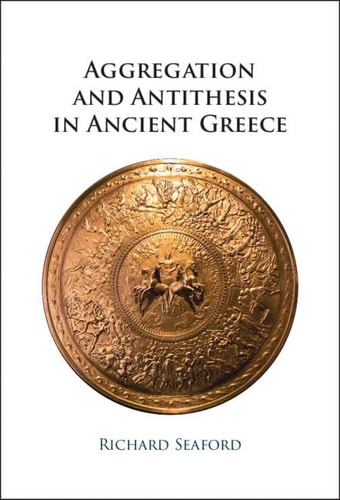
Aggregation And Antithesis In Ancient Greece Richard Seaford

  • SKU: BELL-239940726
Aggregation And Antithesis In Ancient Greece Richard Seaford
$ 35.00 $ 45.00 (-22%)

4.3

68 reviews

Aggregation And Antithesis In Ancient Greece Richard Seaford instant download after payment.

Publisher: Cambridge University Press
File Extension: PDF
File size: 7.7 MB
Author: Richard Seaford
ISBN: 9781009517577, 1009517570
Language: English
Year: 2025

Product desciption

Aggregation And Antithesis In Ancient Greece Richard Seaford by Richard Seaford 9781009517577, 1009517570 instant download after payment.

What is the relationship between forms of thought in literature, philosophy and visual art in ancient Greece, and how are these forms related to their socio-political and economic context? This is the question raised by Richard Seaford in his final book. His answer is framed in terms of the relationship between aggregation and antithesis. In Greece between the eight and fourth centuries BCE, Seaford traces a progressive and complex shift from aggregation to antithesis in literature, philosophy and visual art, and correlates this with the shift from a pre-monetary and pre-polis society to a monetised polis. In the Platonic metaphysics of being, he identifies a further move, the negation of antithesis, which he links with the non-circulating possession of money. In this characteristically ambitious and challenging study, Richard Seaford extends his socio-economic analysis of Greek culture to visual art and includes contrasts with Near Eastern society and art.