logo

EbookBell.com

Most ebook files are in PDF format, so you can easily read them using various software such as Foxit Reader or directly on the Google Chrome browser.
Some ebook files are released by publishers in other formats such as .awz, .mobi, .epub, .fb2, etc. You may need to install specific software to read these formats on mobile/PC, such as Calibre.

Please read the tutorial at this link:  https://ebookbell.com/faq 


We offer FREE conversion to the popular formats you request; however, this may take some time. Therefore, right after payment, please email us, and we will try to provide the service as quickly as possible.


For some exceptional file formats or broken links (if any), please refrain from opening any disputes. Instead, email us first, and we will try to assist within a maximum of 6 hours.

EbookBell Team
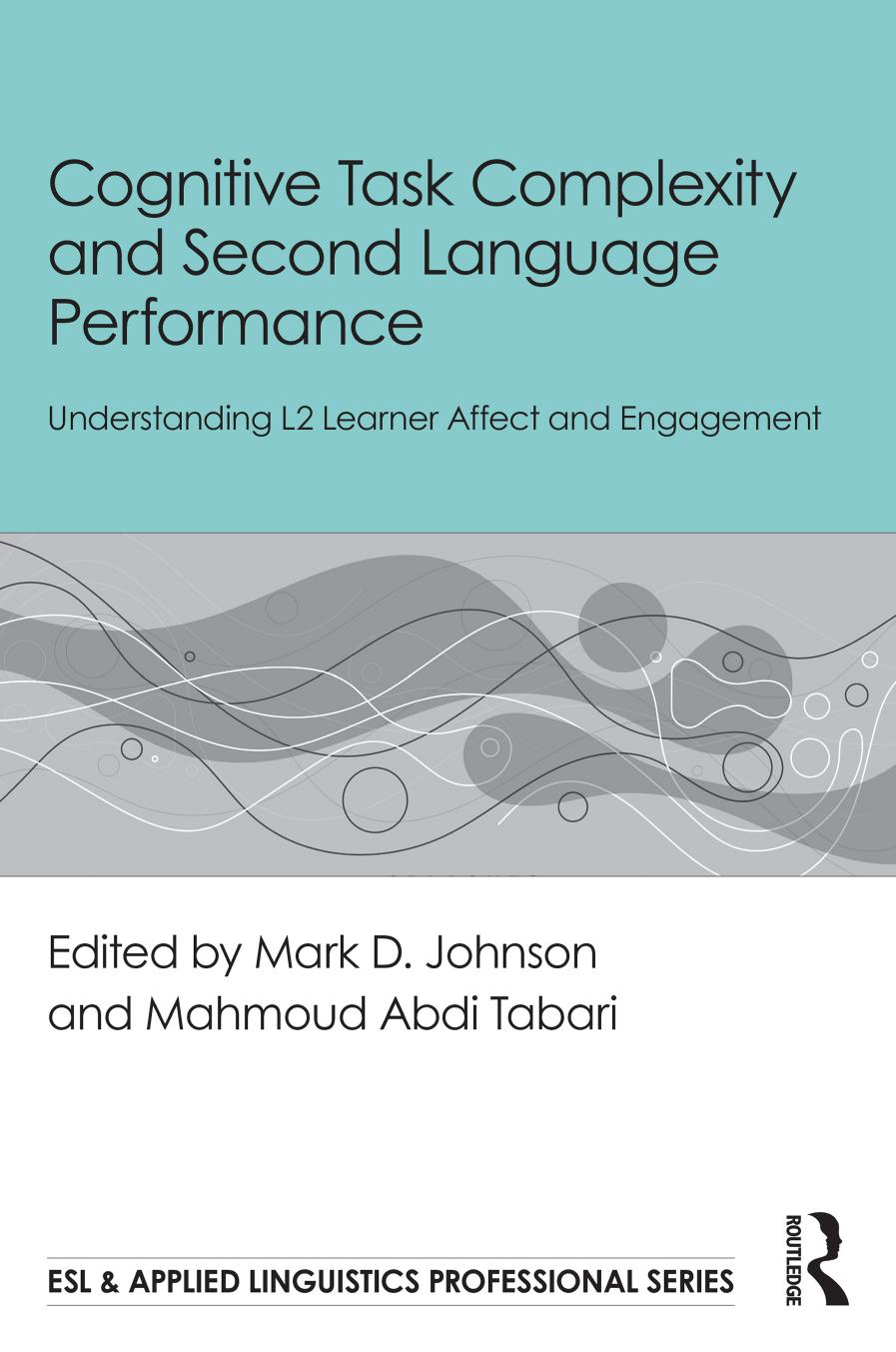
Cognitive Task Complexity And Second Language Performance Understanding L2 Learner Affect And Engagement Mark D Johnson

  • SKU: BELL-239247562
Cognitive Task Complexity And Second Language Performance Understanding L2 Learner Affect And Engagement Mark D Johnson
$ 35.00 $ 45.00 (-22%)

0.0

0 reviews

Cognitive Task Complexity And Second Language Performance Understanding L2 Learner Affect And Engagement Mark D Johnson instant download after payment.

Publisher: Routledge
File Extension: PDF
File size: 5.4 MB
Author: Mark D. Johnson, Mahmoud Abdi Tabari
ISBN: 9781032815169, 1032815167
Language: English
Year: 2025

Product desciption

Cognitive Task Complexity And Second Language Performance Understanding L2 Learner Affect And Engagement Mark D Johnson by Mark D. Johnson, Mahmoud Abdi Tabari 9781032815169, 1032815167 instant download after payment.

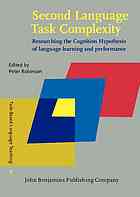
Cognitive Task Complexity and Second Language Performance provides an overview of research focusing on the effects of cognitive task complexity (CTC) on second language (L2) performance. The edited volume brings together renowned scholars in the field who present data-driven insights into the intricate relationships between CTC and L2 performance, drawing on a combination of empirical studies and theoretical analyses. Each section summarizes the intersection of task complexity frameworks and models of second language production; synthesizes critical issues and research findings; and moves beyond the routine discussion of task complexity features and models of speaking, extending the discussion to the interface of task complexity features and (a) learner engagement, (b) virtual interaction, and (c) corpus linguistics. It also delves into the interface of CTC and technology, exploring how digital tools and resources can enhance task complexity and ultimately impact L2 performance. Overall, this edited volume not only consolidates the existing research on CTC and L2 performance but also highlights areas that require further investigation. In charting a course for future research and pedagogy, the book is a valuable resource for students, scholars, researchers, and practitioners seeking to deepen their understanding of CTC and its impact on second language acquisition.