logo

EbookBell.com

Most ebook files are in PDF format, so you can easily read them using various software such as Foxit Reader or directly on the Google Chrome browser.
Some ebook files are released by publishers in other formats such as .awz, .mobi, .epub, .fb2, etc. You may need to install specific software to read these formats on mobile/PC, such as Calibre.

Please read the tutorial at this link:  https://ebookbell.com/faq 


We offer FREE conversion to the popular formats you request; however, this may take some time. Therefore, right after payment, please email us, and we will try to provide the service as quickly as possible.


For some exceptional file formats or broken links (if any), please refrain from opening any disputes. Instead, email us first, and we will try to assist within a maximum of 6 hours.

EbookBell Team
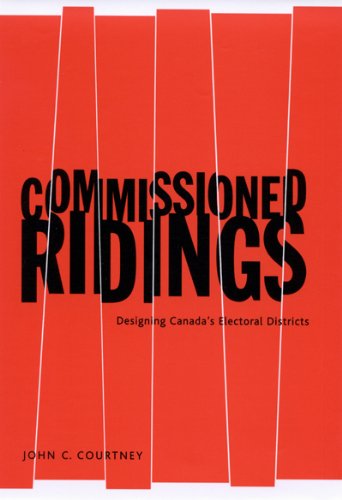
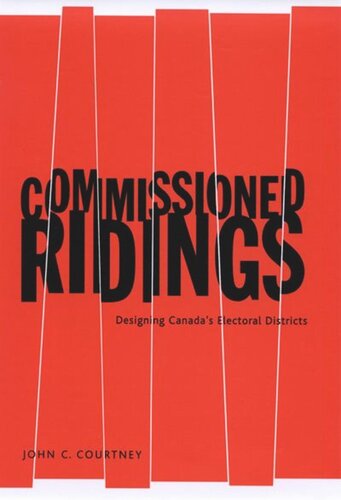
Commissioned Ridings Designing Canadas Electoral Districts John C Courtney

  • SKU: BELL-5595730
Commissioned Ridings Designing Canadas Electoral Districts John C Courtney
$ 35.00 $ 45.00 (-22%)

4.4

72 reviews

Commissioned Ridings Designing Canadas Electoral Districts John C Courtney instant download after payment.

Publisher: McGill-Queen’s University Press
File Extension: PDF
File size: 3.88 MB
Pages: 368
Author: John C. Courtney
ISBN: 9780773522268, 0773522263
Language: English
Year: 2002

Product desciption

Commissioned Ridings Designing Canadas Electoral Districts John C Courtney by John C. Courtney 9780773522268, 0773522263 instant download after payment.

Where did the idea for nonpartisan constituency redistributions come from? What were the principal reasons that Canada turned to arm's-length commissions to design its electoral districts? In "Commissioned Ridings", John Courtney addresses these questions by examining and assessing the readjustment process in Canada's electoral boundaries. Defining electoral districts as representational building blocks, Courtney compares federal and provincial electoral readjustments in the last half of the twentieth century, showing how parliamentarians and legislators, boundary commissions, courts, and interested members of the general public debated representational principles to define the purposes of electoral redistricting in an increasingly urban, ethnically mixed federal state such as Canada. Courtney analyses boundary commissions - their membership, degree of independence, and powers. He explores the participation of the public and politicians in the deliberation of the commissions, as well as the extent to which Canada's ridings have moved gradually toward greater population equality and the prospects for further changes in the way electoral districts are designed. Noting that Canada's electoral boundary readjustments are based on principles markedly different from those in the United States, Courtney examines the impact of various Canadian court decisions based on the right to vote, protection of the Charter, as well as new concepts such as community of interest, minority representation, and effective representation. Courtney concludes with an examination of the conditions that must be met before changes to other representational building blocks, such as the electoral system, can be made.

Related Products