logo

EbookBell.com

Most ebook files are in PDF format, so you can easily read them using various software such as Foxit Reader or directly on the Google Chrome browser.
Some ebook files are released by publishers in other formats such as .awz, .mobi, .epub, .fb2, etc. You may need to install specific software to read these formats on mobile/PC, such as Calibre.

Please read the tutorial at this link:  https://ebookbell.com/faq 


We offer FREE conversion to the popular formats you request; however, this may take some time. Therefore, right after payment, please email us, and we will try to provide the service as quickly as possible.


For some exceptional file formats or broken links (if any), please refrain from opening any disputes. Instead, email us first, and we will try to assist within a maximum of 6 hours.

EbookBell Team
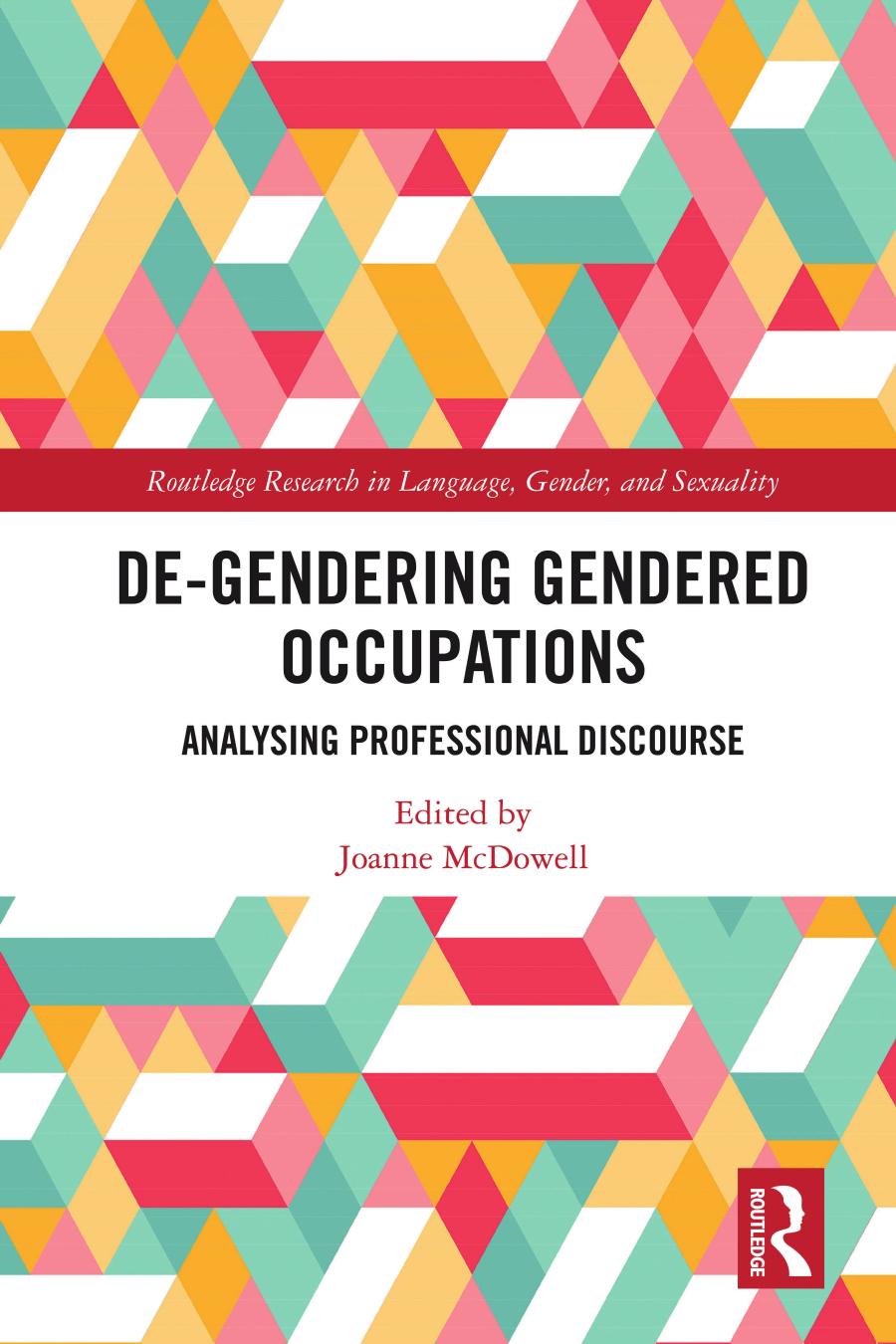
Degendering Gendered Occupations Analysing Professional Discourse Joanne Mcdowell

  • SKU: BELL-237371680
Degendering Gendered Occupations Analysing Professional Discourse Joanne Mcdowell
$ 35.00 $ 45.00 (-22%)

0.0

0 reviews

Degendering Gendered Occupations Analysing Professional Discourse Joanne Mcdowell instant download after payment.

Publisher: Routledge
File Extension: PDF
File size: 2.38 MB
Author: Joanne McDowell
ISBN: 9780429031434, 0429031432
Language: English
Year: 2021

Product desciption

Degendering Gendered Occupations Analysing Professional Discourse Joanne Mcdowell by Joanne Mcdowell 9780429031434, 0429031432 instant download after payment.

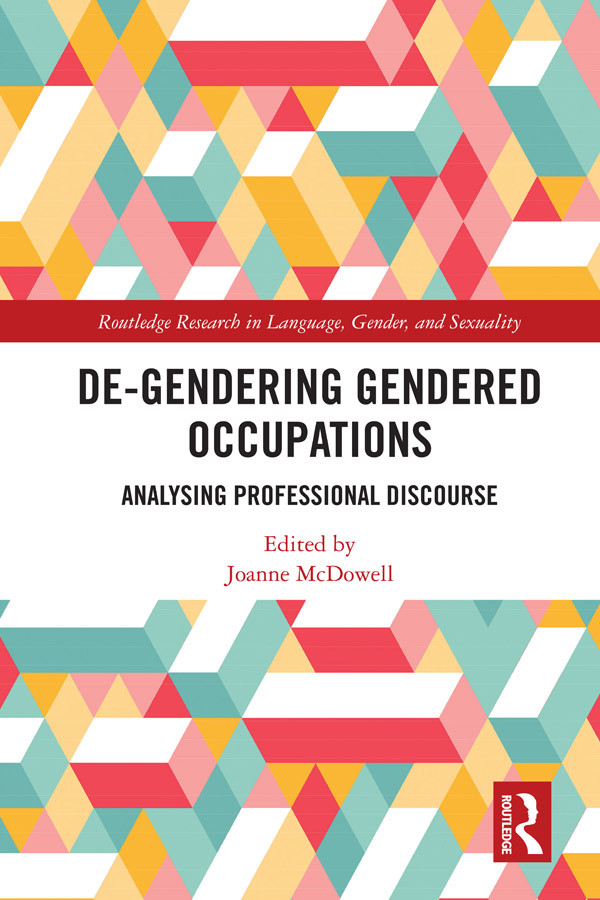
De-gendering Gendered Occupations brings together contributions from researchers on language and gender studies and workplace discourse to unpack and challenge hegemonic gendered norms encoded in what have been traditionally considered ‘female’ occupations in which men are the minority. The volume integrates a range of theoretical frameworks, including conversation analysis, pragmatics, and interactional sociolinguistics, toward analysing data from such professions as primary education, healthcare, and speech and language therapy across various geographic contexts. Through this lens, the first part of the book examines men’s linguistic practices, with the second part offering a comparative analysis of “male” and “female” discourse. The settings discussed here offer researchers the opportunity to explore the ways in which cultural, professional, and gendered identity intersect for practitioners in these professions and, in turn, future implications for discourse around gendered professions more generally. This book will be key reading for students and researchers in sociolinguistics, discourse analysis, gender studies, cultural studies, and professional discourse.

Related Products