Most ebook files are in PDF format, so you can easily read them using various software such as Foxit Reader or directly on the Google Chrome browser.
Some ebook files are released by publishers in other formats such as .awz, .mobi, .epub, .fb2, etc. You may need to install specific software to read these formats on mobile/PC, such as Calibre.
Please read the tutorial at this link: https://ebookbell.com/faq
We offer FREE conversion to the popular formats you request; however, this may take some time. Therefore, right after payment, please email us, and we will try to provide the service as quickly as possible.
For some exceptional file formats or broken links (if any), please refrain from opening any disputes. Instead, email us first, and we will try to assist within a maximum of 6 hours.
EbookBell Team
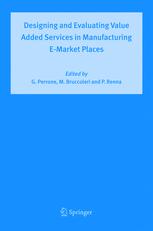
4.0
16 reviewsThe “extended enterprise” is a new emerging paradigm in the manufacturing arena. Indeed, global competition is pushing manufacturing enterprises in several industries either to split geographically the production capacity or to work together in supply chain organizations involving several independent entities. This dynamic is involving both big companies, whose organisation is always more and more decentralised and geographically distributed, and Small and Medium Enterprises (SMEs) that are embracing new organisation forms such as the Virtual Enterprise (VE) one. The “extended enterprise” allows gaining agility, reactive ness, even p- activeness, and, of course, efficiency in the highly dynamic markets of the mass customisation and knowledge based economy era. However, the “extended enterprise” paradigm scales management complexity both at the strategic and operational level up. This requires new tools for managing the complexity of the extended enterprise. The Information and Communication Technology (ICT) enables the possibility to create new and innovative “tools for managing the extended enterprise”. This book addresses the above introduced issue of the tools for the extended enterprise. More specifically, it presents the results of a research developed under a two years program titled “ “Distributed process and production planning in manufacturing enterprise networks” and funded by the Italian Ministry of Education, University and Research (MIUR) under the program PRIN2001.