Most ebook files are in PDF format, so you can easily read them using various software such as Foxit Reader or directly on the Google Chrome browser.
Some ebook files are released by publishers in other formats such as .awz, .mobi, .epub, .fb2, etc. You may need to install specific software to read these formats on mobile/PC, such as Calibre.
Please read the tutorial at this link: https://ebookbell.com/faq
We offer FREE conversion to the popular formats you request; however, this may take some time. Therefore, right after payment, please email us, and we will try to provide the service as quickly as possible.
For some exceptional file formats or broken links (if any), please refrain from opening any disputes. Instead, email us first, and we will try to assist within a maximum of 6 hours.
EbookBell Team
0.0
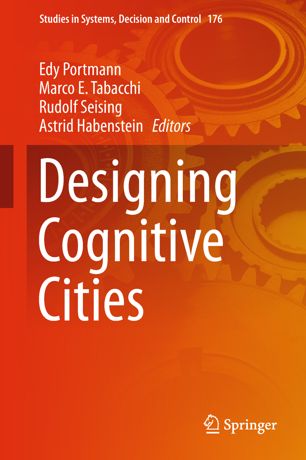
0 reviewsThis book illustrates various aspects and dimensions of cognitive cities. Following a comprehensive introduction, the first part of the book explores conceptual considerations for the design of cognitive cities, while the second part focuses on concrete applications. The contributions provide an overview of the wide diversity of cognitive city conceptualizations and help readers to better understand why it is important to think about the design of our cities. The book adopts a transdisciplinary approach since the cognitive city concept can only be achieved through cooperation across different academic disciplines (e.g., economics, computer science, mathematics) and between research and practice. More and more people live in a growing number of ever-larger cities. As such, it is important to reflect on how cities need to be designed to provide their inhabitants with the means and resources for a good life. The cognitive city is an emerging, innovative approach to address this need.