logo

EbookBell.com

Most ebook files are in PDF format, so you can easily read them using various software such as Foxit Reader or directly on the Google Chrome browser.
Some ebook files are released by publishers in other formats such as .awz, .mobi, .epub, .fb2, etc. You may need to install specific software to read these formats on mobile/PC, such as Calibre.

Please read the tutorial at this link:  https://ebookbell.com/faq 


We offer FREE conversion to the popular formats you request; however, this may take some time. Therefore, right after payment, please email us, and we will try to provide the service as quickly as possible.


For some exceptional file formats or broken links (if any), please refrain from opening any disputes. Instead, email us first, and we will try to assist within a maximum of 6 hours.

EbookBell Team
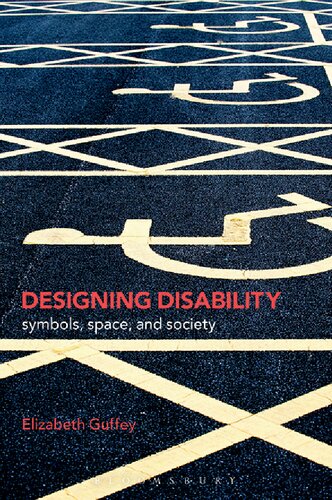
Designing Disability Symbols Space And Society Elizabeth Guffey

  • SKU: BELL-50234876
Designing Disability Symbols Space And Society Elizabeth Guffey
$ 35.00 $ 45.00 (-22%)

5.0

48 reviews

Designing Disability Symbols Space And Society Elizabeth Guffey instant download after payment.

Publisher: Bloomsbury Academic
File Extension: PDF
File size: 5.56 MB
Author: Elizabeth Guffey
ISBN: 9781350004283, 9781350004276, 9781350004245, 1350004286, 1350004278, 1350004243
Language: English
Year: 2017

Product desciption

Designing Disability Symbols Space And Society Elizabeth Guffey by Elizabeth Guffey 9781350004283, 9781350004276, 9781350004245, 1350004286, 1350004278, 1350004243 instant download after payment.

Designing Disability traces the emergence of an idea and an ideal — physical access for the disabled — through the evolution of the iconic International Symbol of Access (ISA).
The book draws on approaches from design history, material culture and recent critical disability studies to examine not only the development of a design icon, but also the cultural history surrounding it. Infirmity and illness may be seen as part of human experience, but ’disability’ is a social construct, a way of thinking about and constructing responses to human conditions.
Elizabeth Guffey’s highly original and wide-ranging study addresses the period before the ISA, tracing the design history of the wheelchair, a product that spoke to the mobility needs of a growing community of veterans and polio survivors from the 1930s onwards. She examines the rise of ’barrier-free architecture’ in the US, which takes shape around the modern wheelchair, and the consequent need for signage. She analyses the reception of the ISA, with the symbol becoming widely adopted and even a mark of identity, especially for the Disability Rights Movement. But ultimately, a growing debate has unfurled around this symbol; the most vigorous critique today has evolved with guerrilla art, graffiti and studio practice, and above all, it reflects a series of new challenges to design and disability in the twenty-first century.

Related Products