Most ebook files are in PDF format, so you can easily read them using various software such as Foxit Reader or directly on the Google Chrome browser.
Some ebook files are released by publishers in other formats such as .awz, .mobi, .epub, .fb2, etc. You may need to install specific software to read these formats on mobile/PC, such as Calibre.
Please read the tutorial at this link: https://ebookbell.com/faq
We offer FREE conversion to the popular formats you request; however, this may take some time. Therefore, right after payment, please email us, and we will try to provide the service as quickly as possible.
For some exceptional file formats or broken links (if any), please refrain from opening any disputes. Instead, email us first, and we will try to assist within a maximum of 6 hours.
EbookBell Team
4.7
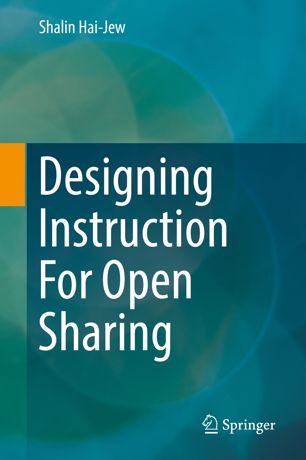
16 reviewsThis textbook considers and addresses the design of online learning objects, electronic textbooks, short courses, long courses, MOOC courses, and other types of contents for open sharing. It also considers the design of online mediated communities to enhance such learning. The “openness” may be open-access, and/or it may even be open-source. The learning may range from self-directed and automated to AI robot-led to instructor-led.
The main concept of this work is that design learning for open sharing, requires different considerations than when designing for closed and proprietary contexts. Open sharing of learning contents requires a different sense of laws (intellectual property, learner privacy, pedagogical strategies, technologies, media, and others). It requires different considerations of learner diversity and inclusion. It requires geographical, cultural, and linguistic considerations that are not as present in more localized designs. The open sharing aspect also has effects on learner performance tracking (assessments) and learner feedback.
This textbook targets students, both undergraduate and graduate in computer science, education and other related fields. Also, professionals in this field managing online systems would find this book helpful.