logo

EbookBell.com

Most ebook files are in PDF format, so you can easily read them using various software such as Foxit Reader or directly on the Google Chrome browser.
Some ebook files are released by publishers in other formats such as .awz, .mobi, .epub, .fb2, etc. You may need to install specific software to read these formats on mobile/PC, such as Calibre.

Please read the tutorial at this link:  https://ebookbell.com/faq 


We offer FREE conversion to the popular formats you request; however, this may take some time. Therefore, right after payment, please email us, and we will try to provide the service as quickly as possible.


For some exceptional file formats or broken links (if any), please refrain from opening any disputes. Instead, email us first, and we will try to assist within a maximum of 6 hours.

EbookBell Team
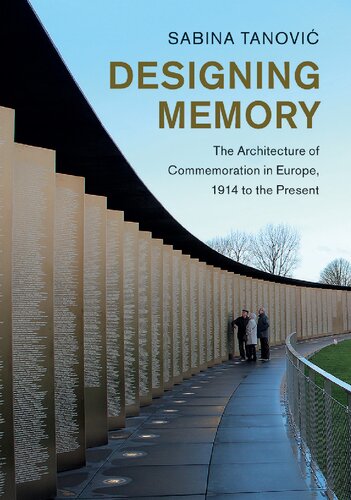
Designing Memory The Architecture Of Commemoration In Europe 1914 To The Present Sabina Tanović

  • SKU: BELL-22088146
Designing Memory The Architecture Of Commemoration In Europe 1914 To The Present Sabina Tanović
$ 35.00 $ 45.00 (-22%)

4.3

78 reviews

Designing Memory The Architecture Of Commemoration In Europe 1914 To The Present Sabina Tanović instant download after payment.

Publisher: Cambridge University Press
File Extension: PDF
File size: 16.69 MB
Pages: 368
Author: Sabina Tanović
ISBN: 9781108486521, 1108486525
Language: English
Year: 2019

Product desciption

Designing Memory The Architecture Of Commemoration In Europe 1914 To The Present Sabina Tanović by Sabina Tanović 9781108486521, 1108486525 instant download after payment.

This innovative study of memorial architecture investigates how design can translate memories of human loss into tangible structures, creating spaces for remembering. Using approaches from history, psychology, anthropology and sociology, Sabina Tanović explores purposes behind creating contemporary memorials in a given location, their translation into architectural concepts, their materialisation in the face of social and political challenges, and their influence on the transmission of memory. Covering the period from the First World War to the present, she looks at memorials such as the Holocaust museums in Mechelen and Drancy, as well as memorials for the victims of terrorist attacks, to unravel the private and public role of memorial architecture and the possibilities of architecture as a form of agency in remembering and dealing with a difficult past. The result is a distinctive contribution to the literature on history and memory, and on architecture as a link to the past.

Related Products